

Collectible Porcelain Sculpture Buying Guide for Collectors
Last Updated: November 12, 2026
Quick Summary
A collectible porcelain sculpture is judged first by its craftsmanship, then by its authenticity, condition and documentation. Check the backstamp and item number against the official catalogue, inspect the piece's delicate projections and glaze under raking light, and confirm any restoration in writing before you pay. Retirement alone does not establish value.
- Compare the backstamp and item number against the official catalogue entry for the sculpture.
- Ask for close photographs of the base, marks and every projecting element before buying.
- Inspect the silhouette first, then the delicate projections, base, glaze and any signs of repair.
- Get the condition, including chips, cracks and restoration, confirmed in writing before payment.
- Value a piece as a range from several comparable completed sales, adjusted for condition and completeness.
Table of Contents
- Why Collectible Porcelain Sculpture Rewards a Careful Buyer
- How to Identify Authentic Lladró Before You Buy
- Porcelain Sculpture Condition Checklist for Buyers
- Lladró Sculpture Provenance and Documentation
- What Retirement and Edition Size Really Mean for Value
-
Valuing a Piece Using Comparable Sales and Condition
- Step 1: Identify the Exact Model
- Step 2: Separate Retired from Limited
- Step 3: Build a Comparable Set, Not a Single Data Point
- Step 4: Adjust for Condition, Completeness and Presentation
- Step 5: Read the Result as a Range
- Step 6: Account for the Costs Beyond the Hammer
- Step 7: Sanity-Check Against the Artwork
- Your Next Step: Choosing a Piece to Acquire
- Frequently Asked Questions
Why Collectible Porcelain Sculpture Rewards a Careful Buyer
Porcelain sculpture is one of the few collecting categories where craftsmanship is visible in every surface. Collectors come to this field for the artistry first and the rarity second.
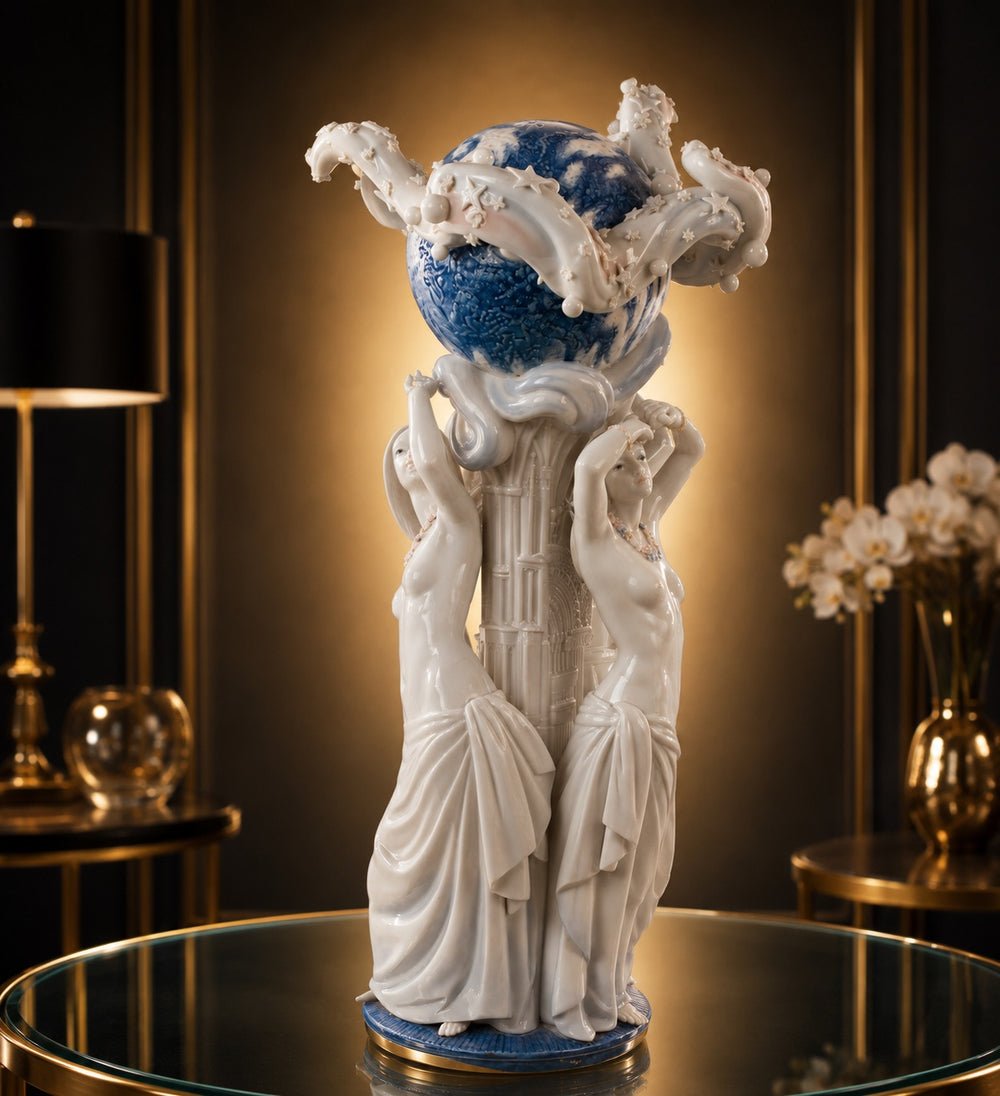
The most useful starting point is the sculpture itself. Look at the modelling of the faces, the drape of fabric, the balance of the composition and the consistency of the glaze.
How to Identify Authentic Lladró Before You Buy
Authenticity is the first question serious collectors ask. Lladró pieces carry marks, item numbers and sculptor attributions that can be checked against published references. Treat any listing that cannot provide these details with caution.
Marks, Item Numbers and Sculptor Attribution
Every genuine piece should carry a backstamp and an item number. Compare the number against the official catalogue entry for that sculpture, including its issue years and sculptor. A mismatch between the number, the subject and the description is a warning sign.
Ask the seller for close photographs of the base and marks. If you are unsure how to verify a piece on your own, the Elite Limited Editions team at High End Collectibles can talk through the marks on a specific piece before you commit.
Finish, Scale and Construction
Examine the finish under even daylight. Check that the dimensions in the listing match the piece in hand where possible, since scale is hard to judge from a photograph alone.
Look at joins, edges and the underside. Irregular seams deserve a closer look.
Porcelain Sculpture Condition Checklist for Buyers
Condition is where a porcelain sculpture buying guide earns its keep. Two examples of the same retired Lladró model can sit at very different points on the collector market, and the difference is usually visible long before anyone discusses edition size. The checklist below is written as a sequence, because the order in which you inspect a piece matters: you want to rule out structural problems before you fall in love with the glaze.
Step 1: Read the Silhouette Before the Surface
Begin at arm's length and look at the outline of the sculpture against a plain background. Porcelain is fired as a whole, so a genuine piece should read as one continuous form. A silhouette that dips oddly at a shoulder, a hem or a raised hand is worth investigating before you look at any detail.
Step 2: Inspect the Delicate Projections
Lladró compositions frequently depend on slender elements, fingers, flower stems, ribbons, the tips of a dancer's skirt, the edge of a hat brim. These are the first places to chip and the last places a casual seller photographs. Ask specifically for close images of every projecting element, and in person, run a fingertip gently along each edge.
Step 3: Check the Base and the Underside
The base tells you two things at once: whether the marks are consistent with the piece, and whether the sculpture has been dropped or re-seated. Look for fresh abrasion, uneven felt, or a base that does not sit flat. On a piece that should carry a wooden base, confirm the base is the original one and that the fit is clean.
Step 4: Examine the Glaze Under Raking Light
Hold the piece so that light crosses the surface at a low angle rather than straight on. Raking light reveals what direct light hides: hairline fractures, dull patches, and areas where the gloss has been disturbed. High Porcelain and gres finishes each have their own characteristic surface, and a patch that reads matte against a glossy field deserves a question.
Step 5: Look for Signs of Intervention
A piece that has been worked on is not automatically a piece to avoid, but the buyer is entitled to know. Watch out: mismatched paint at a repair line, a gloss that is slightly too uniform, or a filled area that does not catch light the way the surrounding glaze does are all reasons to ask the seller directly what has been done to the piece and to request photographs of the area in daylight.
Step 6: Confirm What Travels With the Piece
Original boxes, certificates, bases and any accompanying paperwork are part of the object's story and part of its appeal to future collectors. Ask what is included, and ask for a photograph of the packaging as well as the sculpture. A complete presentation is easier to document and easier to pass on.
Step 7: Put the Condition in Writing
Before payment, ask the seller to confirm the condition in writing, including any chips, cracks, restoration, missing accessories or replaced elements.
A piece with honest minor wear can still be a rewarding acquisition. The point of the checklist is to make sure the price you agree reflects the piece you are actually buying.
Lladró Sculpture Provenance and Documentation
Provenance is the documented history of ownership. For a retired or limited piece, a clear chain of ownership reassures buyers. Ask the seller whether the piece has an identifiable history and whether any records exist.
What Retirement and Edition Size Really Mean for Value
Retirement means a piece is no longer produced. It does not, by itself, make a sculpture rare or valuable. Edition size is informative, but demand, condition and subject matter still shape the final price.
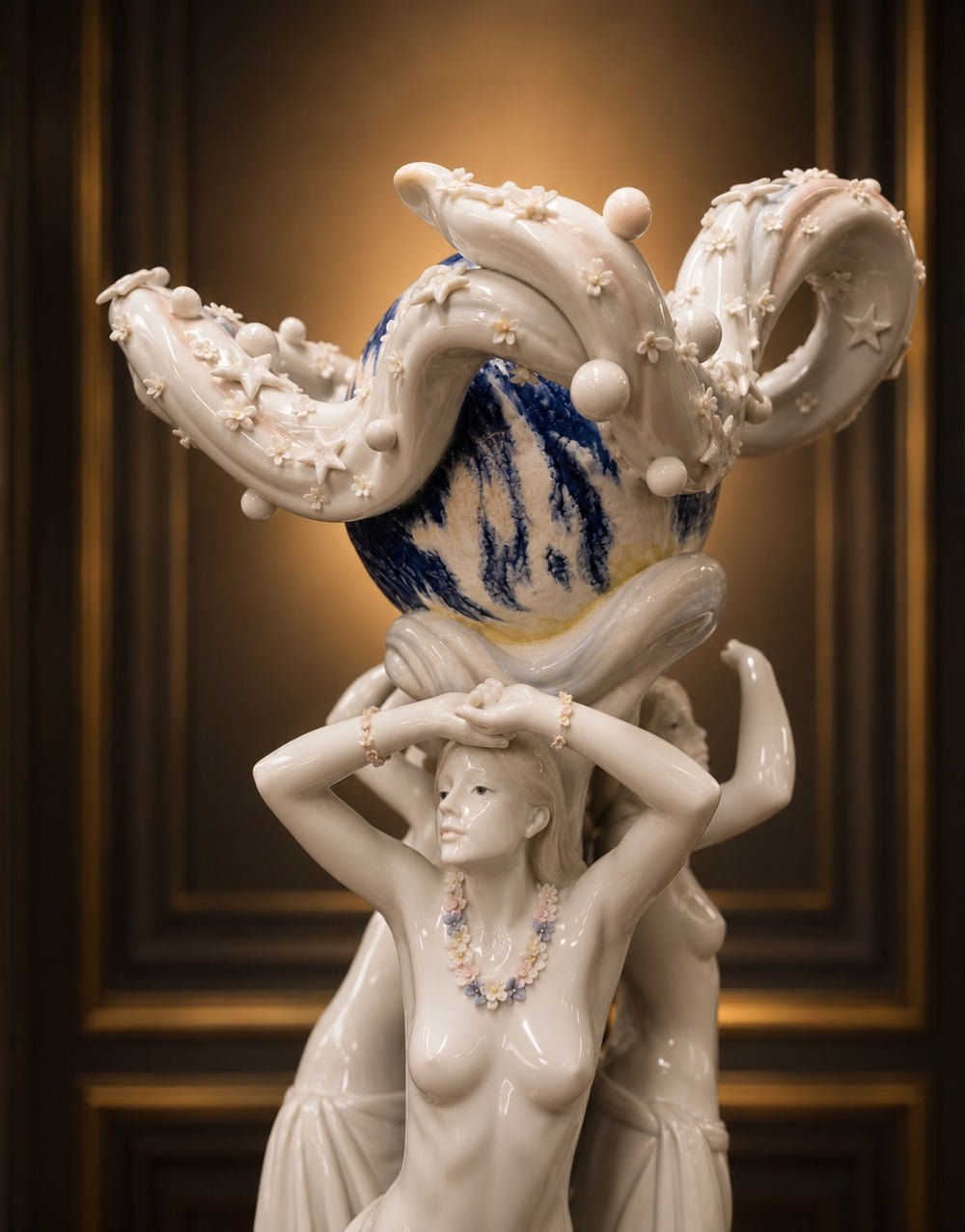
Be cautious of any claim that a piece is guaranteed to appreciate. Porcelain values move with collector interest, and no outcome can be promised.
Valuing a Piece Using Comparable Sales and Condition
Asking prices tell you what sellers hope for. Sold prices tell you what collectors actually paid. The method below turns that distinction into a repeatable process you can apply to any Lladró sculpture, whether you are considering a single piece or comparing several candidates in a collection.
Step 1: Identify the Exact Model
Valuation begins with certainty about what you are valuing. Record the item number, the sculptor attribution and the finish, and confirm them against the official catalogue entry. A number that does not match the subject, or a description that blends two different finishes, means you are not yet comparing like with like.
Step 2: Separate Retired from Limited
Retirement and limited edition are different facts and they behave differently in the market. A retired piece is no longer in production; a limited edition was produced in a stated quantity. Neither fact on its own establishes rarity or value. When you gather comparables, note which category each sale belongs to, because a limited edition of a few hundred pieces and a retired open-edition model are not interchangeable reference points even when the subject is similar.
Step 3: Build a Comparable Set, Not a Single Data Point
Collect several completed sales of the same model rather than relying on one. Where possible, look for sales within a reasonably recent window so that the figures reflect current collector interest rather than an older market. A single high sale can reflect an unusually motivated buyer; a cluster of sales is more informative.
Step 4: Adjust for Condition, Completeness and Presentation
Once you have a set of sold prices, adjust each one toward your candidate piece. The main variables are condition, completeness and presentation:
- Condition. A piece with a chip, a hairline fracture or visible restoration should be compared with sales of similarly affected examples, not with pristine ones. If no such comparables exist, discount the pristine figure in your own reasoning rather than assuming the market will ignore the flaw.
- Completeness. Original box, certificate, base and paperwork all affect how a piece presents to a future buyer. A complete example and a loose example of the same model are not the same object in market terms.
- Presentation. A well-photographed, clearly described piece attracts more serious buyers than an ambiguous listing, and that difference is often reflected in the final price.
Step 5: Read the Result as a Range
A defensible valuation is a range, not a number. If your comparable set clusters around a level and your candidate piece is complete and in excellent condition, it sits toward the upper part of that range. If it carries honest wear or lacks its packaging, it sits lower.
Step 6: Account for the Costs Beyond the Hammer
The figure on a sold listing is rarely the whole outlay. When you budget for a piece, include shipping and insurance for a fragile object, any applicable import duties, customs charges, tariffs and fees on pieces shipped internationally, and the practical cost of displaying and storing porcelain safely.
Step 7: Sanity-Check Against the Artwork
Finally, return to the sculpture itself. Comparable sales describe the market; they do not describe the piece in front of you. The modelling of the faces, the drape of the fabric, the balance of the composition and the consistency of the glaze are what will keep the piece satisfying long after the transaction.
For a worked example of how a complete, new-in-box limited edition is presented to collectors, see the Lladro Maestro Matador Green 01008730 Limited Edition 250 New In Box. For a model-by-model approach to the same question, our guide on How to Assess Lladró Figurine Value by Model walks through the steps in more detail, and the Elite Limited Editions collection shows how edition pieces are curated for collectors.
The method below breaks valuation into steps a collector can repeat for any Lladró sculpture.
| Step | What to do | Key point |
|---|---|---|
| 1. Identify the exact model | Confirm item number, sculptor and finish | Compare only like with like |
| 2. Separate retired from limited | Note which category each sale belongs to | Neither fact alone sets value |
| 3. Build a comparable set | Collect several completed sales of the same model | A cluster beats one sale |
| 4. Adjust for condition | Compare with similarly affected examples | Condition, completeness, presentation |
| 5. Read the result as a range | Write the range down before negotiating | Upper end for complete, excellent pieces |
| 6. Account for costs | Budget shipping, insurance, duties and fees | Figure on a sold listing is not the full outlay |
| 7. Sanity-check the artwork | Judge modelling, drape, balance and glaze | Valuation is a tool, not a substitute |
Your Next Step: Choosing a Piece to Acquire
Start with the sculptor or the subject that moves you most, then narrow your search by condition, edition size and documentation. Browse Lladró sculptures by sculptor to see how the artists' work compares, or explore the Rare & Retired Lladró Masterpieces and the Limited Collections for pieces worth a serious look.
Every acquisition is a personal decision. Take your time, ask questions and choose a piece you will enjoy for years. For Discerning Lladró Collectors, the right sculpture is one that still delights you long after the purchase.
Frequently Asked Questions
What should I look for when buying a collectible porcelain sculpture?
Start with the maker's mark, item number and sculptor attribution, then check the finish, scale and construction against the published specifications for that piece. Inspect the surface and base in good light for chips, hairline cracks, repaints and restoration. Ask for the original box, paperwork and any documentation of provenance. Compare the asking price with recent sold prices for the same model and condition before committing. A seller who answers these questions clearly and in writing is usually a safer partner than one who does not.
How can I check whether a Lladró sculpture is authentic?
Begin with the backstamp or mark and confirm that the item number and sculptor name match the official record for that model. Examine the finish, the quality of the painting and the crispness of the modelling, which should be consistent with the published description. Compare the piece against trusted reference sources and photographs of verified examples. Where a piece is high value, ask for documentation of origin and consider an independent appraisal before purchase. Uncertainty about attribution should lower your offer, not be accepted as a minor detail.
Does a retired porcelain sculpture automatically become rare?
No. Retirement only means that production has stopped, and many retired pieces were produced in large numbers and remain widely available. Rarity depends on the edition size, the number of examples that survive in good condition and the level of current collector demand. A limited edition with a documented, small production run is a different proposition from a retired open-production figure. Treat retirement as one factor to verify, not as proof of scarcity or future value.
How should I assess the condition of a porcelain sculpture?
Examine the piece under bright, even light and look closely at delicate elements such as hands, faces, flowers and thin extremities, where chips and cracks most often occur. Check for repainting, uneven glaze, crazing and any sign of restoration, which can reduce value even when it is well executed. Confirm that all original parts, bases and accessories are present. Record the condition in writing with photographs before paying, so that any disagreement has a clear reference point.


