
Article: 7 Collectible Lladró Animal Sculptures to Know

7 Collectible Lladró Animal Sculptures to Know
Last Updated: November 22, 2026
Quick Summary
Seven collectible lladró animal sculptures worth knowing include the retired Bird Trio 01001369, the monumental Pursued Deer 01001377, Camel 01002008, Koi (Blue & Gold) 01009579, Macaw Bird 01009401, and the Oriental Lion and Lioness pair 01001987 and 01001986. Each carries a documented item number and sculptor attribution, and the selection favors closed editions, retirement, and complete examples.
- Bird Trio 01001369 was sculpted by Salvador Debón and retired in 1985.
- Pursued Deer 01001377 is an Elite Limited Edition of 750, 41.75 inches wide.
- Macaw Bird 01009401 had the shortest run, capped at 300 pieces and retired in 2020.
- Oriental Lion and Lioness are editions of 1,500 each, with the Lioness retired in 2023.
- Confirm item numbers against the marking on the piece, not just the listing text.
Table of Contents
- Why Lladró Animal Sculptures Hold Collector Attention
- How We Selected These Seven Lladró Animal Sculptures
- 1. Bird Trio #01001369: Salvador Debón's Retired Aviary Study
- 2. Pursued Deer #01001377: The Elite High Porcelain Wildlife Masterpiece
- 3. Camel #01002008: Alfredo Llorens and the Ceremonial Saddle
- 4. Koi (Blue & Gold) #01009579: Virginia Gonzalez and the Boldblue Collection
- 5. Macaw Bird #01009401: A 300-Piece Edition Retired After One Year
- 6. Oriental Lion and Lioness #01001987 / #01001986: Francisco Polope's Guardian Pair
- What to Check Before Acquiring a Lladró Animal Sculpture
- Frequently Asked Questions
Why Lladró Animal Sculptures Hold Collector Attention
Lladró animal sculptures occupy a singular place in Spanish porcelain. Animals have long been one of the richest subjects in Lladró's work, and the finest examples now anchor serious collections.
The appeal is not simply decorative. Animal subjects let Lladró's sculptors explore movement, anatomy, and emotion in ways human figures sometimes cannot; a leaping deer or a coiled koi carries drama without a narrative to explain it.
Our selection favors pieces where verified documentation, sculptural ambition, and genuine scarcity converge.
How We Selected These Seven Lladró Animal Sculptures
We built this selection around four tests a collector can apply independently: verified edition size, retirement or edition closure, sculptural significance within Lladró's animal repertoire, and the completeness of the example described. Every sculpture here carries a documented item number and sculptor attribution.
The Selection Criteria That Matter
Each piece had to satisfy at least three of the following:
- Documented edition size. Open-edition pieces are produced in quantity; numbered limited editions of 750 or fewer are not. Where an edition is capped, we state the cap.
- Retirement or edition closure. A piece that left production, especially after a short run, carries different collector weight than one still in production. We distinguish retirement from limited-edition status throughout.
- Sculptor attribution. Works by named Lladró artists such as Salvador Furió, Francisco Polope, Salvador Debón, Alfredo Llorens, Virginia Gonzalez, and Joan Coderch hold particular interest because attribution supports identification and scholarship.
Retirement alone does not establish rarity. A retired open-edition figurine may remain plentiful on the secondary market. What matters is the combination: a closed edition, a named sculptor, and a complete example.
Applying the Criteria: A Side-by-Side View
The table below shows how the seven pieces differ on the factors that most affect collector interest.
| Sculpture | Item No. | Sculptor | Edition | Status | Standout Quality |
|---|---|---|---|---|---|
| Bird Trio | 01001369 | Salvador Debón | Open edition | Retired 1985 | Compact glazed aviary study |
| Pursued Deer | 01001377 | Salvador Furió | 750 | High Porcelain, Elite Limited | Monumental museum-scale drama |
| Camel | 01002008 | Alfredo Llorens | 500 | Limited | Ceremonial saddle detail |
| Koi (Blue & Gold) | 01009579 | Virginia Gonzalez | 750 | Limited | Contemporary Boldblue palette |
| Macaw Bird (Blue & Gold) | 01009401 | Joan Coderch | 300 | Retired 2020 | Shortest production run |
| Oriental Lion & Lioness | 01001987 / 01001986 | Francisco Polope | 1,500 each | Pair, Lioness retired 2023 | Matched guardian presentation |
What the Comparison Reveals
Three patterns emerge. First, scale varies enormously: the Bird Trio at under nine inches and the Pursued Deer at nearly forty-two inches wide belong to entirely different display contexts. Second, edition size and production window do not move together; the Macaw Bird's 300-piece cap and one-year window make it the tightest supply in the group, while the Oriental Lion and Lioness pair, at 1,500 each, is the most attainable as a matched set. Third, sculptor attribution clusters: Furió and Polope anchor the monumental and guardian works, while Debón, Llorens, Gonzalez, and Coderch represent the aviary, ornamental, and contemporary strands.
Experienced collectors often choose one strand and build depth within it. An aviary-focused collection might pair the Bird Trio with the Macaw Bird; a guardian-focused collection might pair the Oriental Lion and Lioness with Polope's larger Guardian Lion (Blue) #01001991, a High Porcelain edition of 188.
Watch out: an item number printed in a listing is not proof of edition size. Confirm the number against the marking on the piece itself and, where a certificate is present, against the certificate.
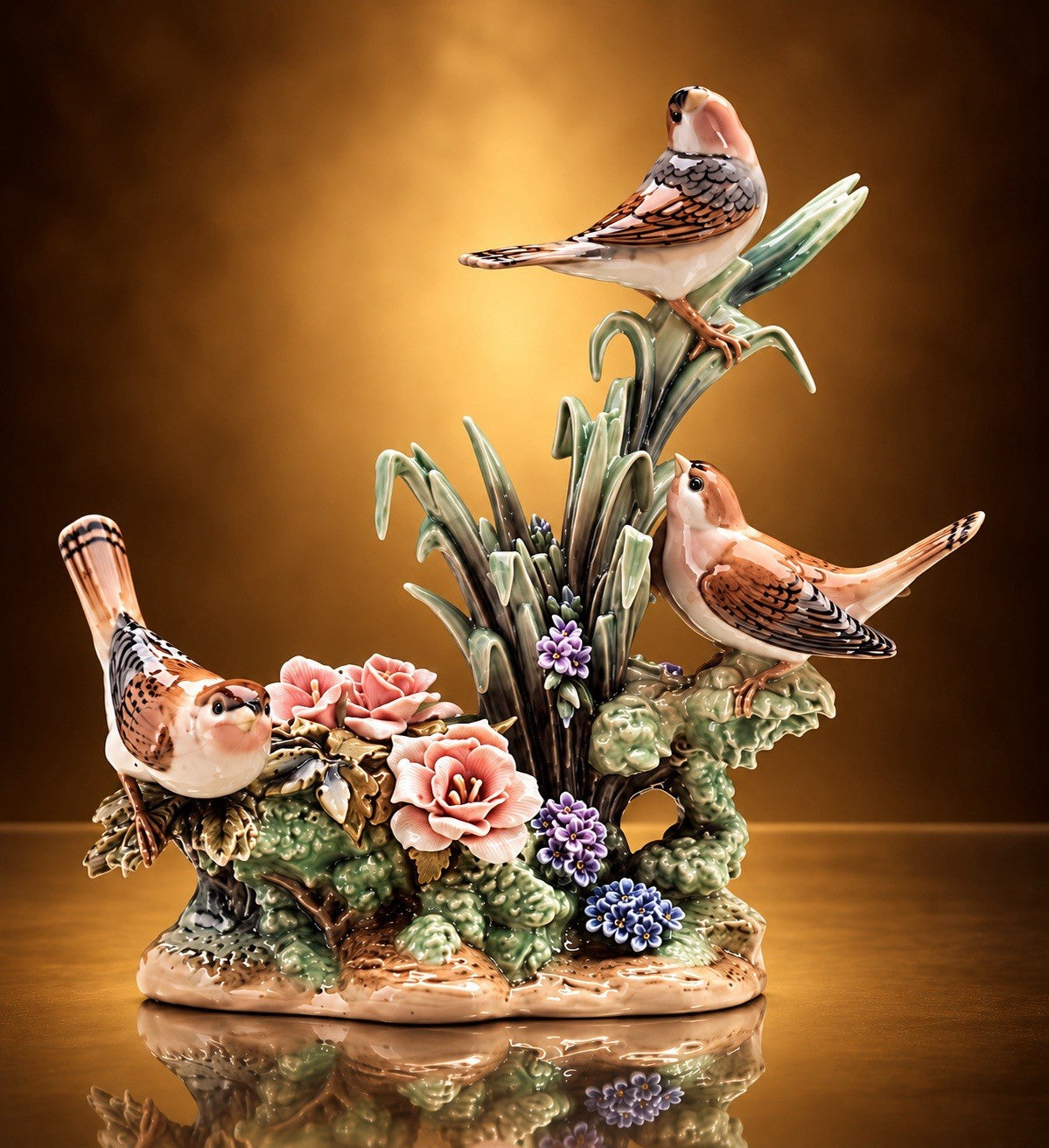
1. Bird Trio #01001369: Salvador Debón's Retired Aviary Study
Bird Trio is a compact glazed porcelain composition of colorful birds set among delicate foliage, sculpted by Salvador Debón and introduced in 1978.
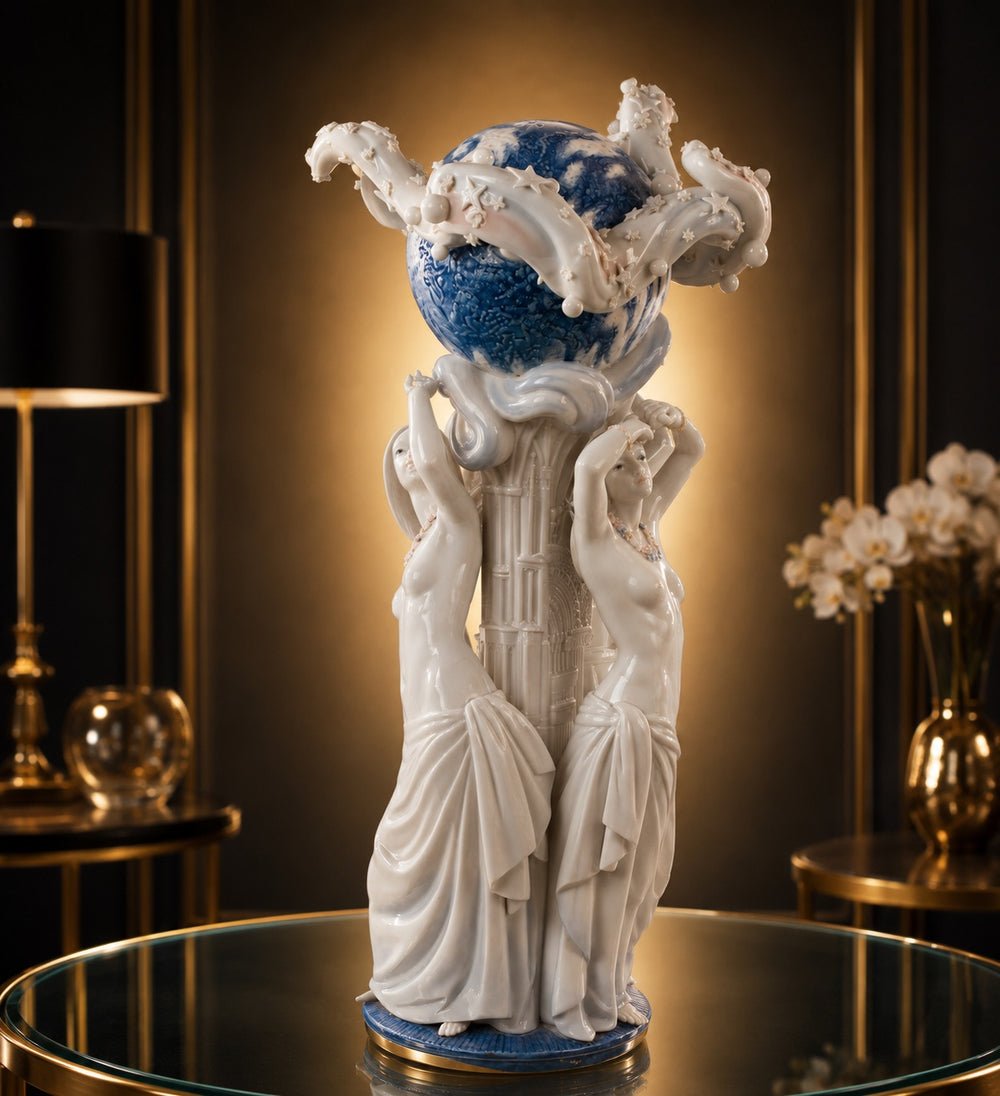
What distinguishes this piece is its scale relative to its detail.
The example we offer is in mint condition and includes its original box. View the Bird Trio listing to examine the piece and its condition directly.
2. Pursued Deer #01001377: The Elite High Porcelain Wildlife Masterpiece
Pursued Deer, also known to collectors as Fearful Flight, is among the most ambitious wildlife sculptures Lladró has produced.
At 41.75 inches wide, this is a museum-scale work. It is recognized as one of the defining works of Lladró High Porcelain.
The example we offer is presented like new in its original box, complete with the original base and certificate of authenticity, and ships directly from Spain. Examine the Pursued Deer listing for edition details and presentation.
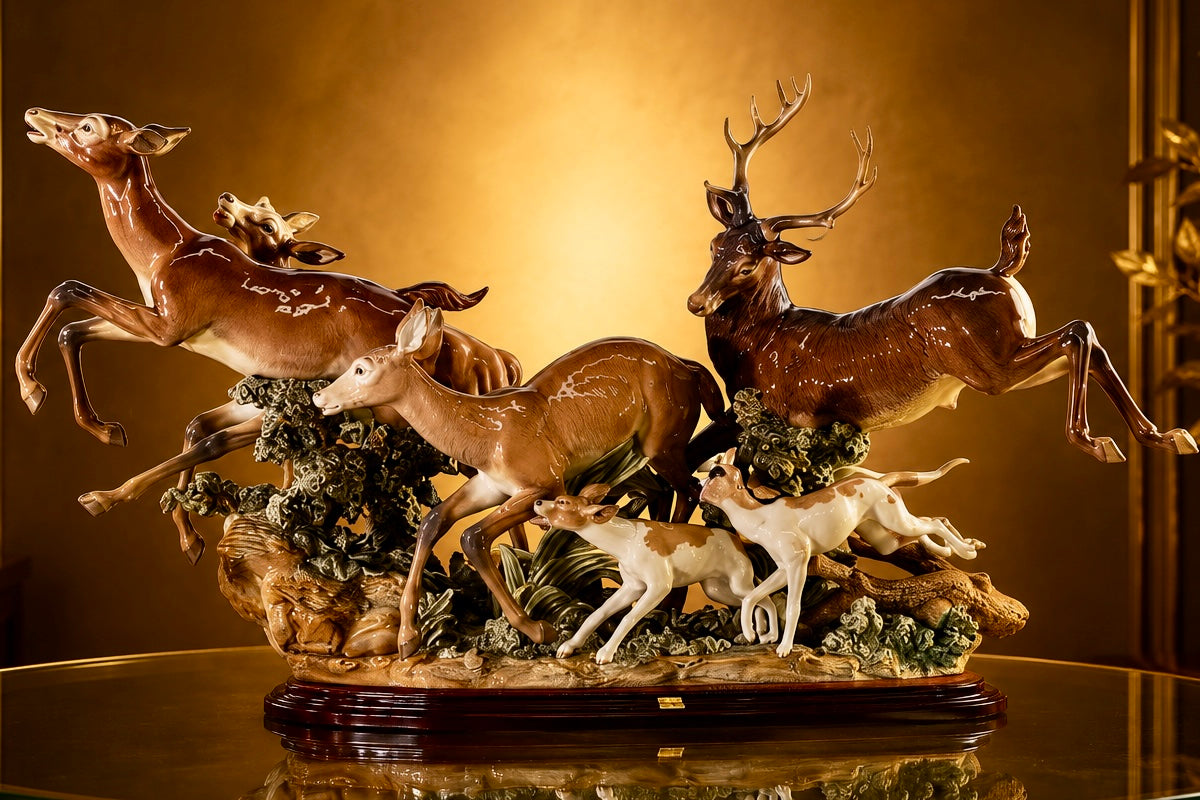
Confirm the base is present and inspect the extremities before placing the piece.
3. Camel #01002008: Alfredo Llorens and the Ceremonial Saddle
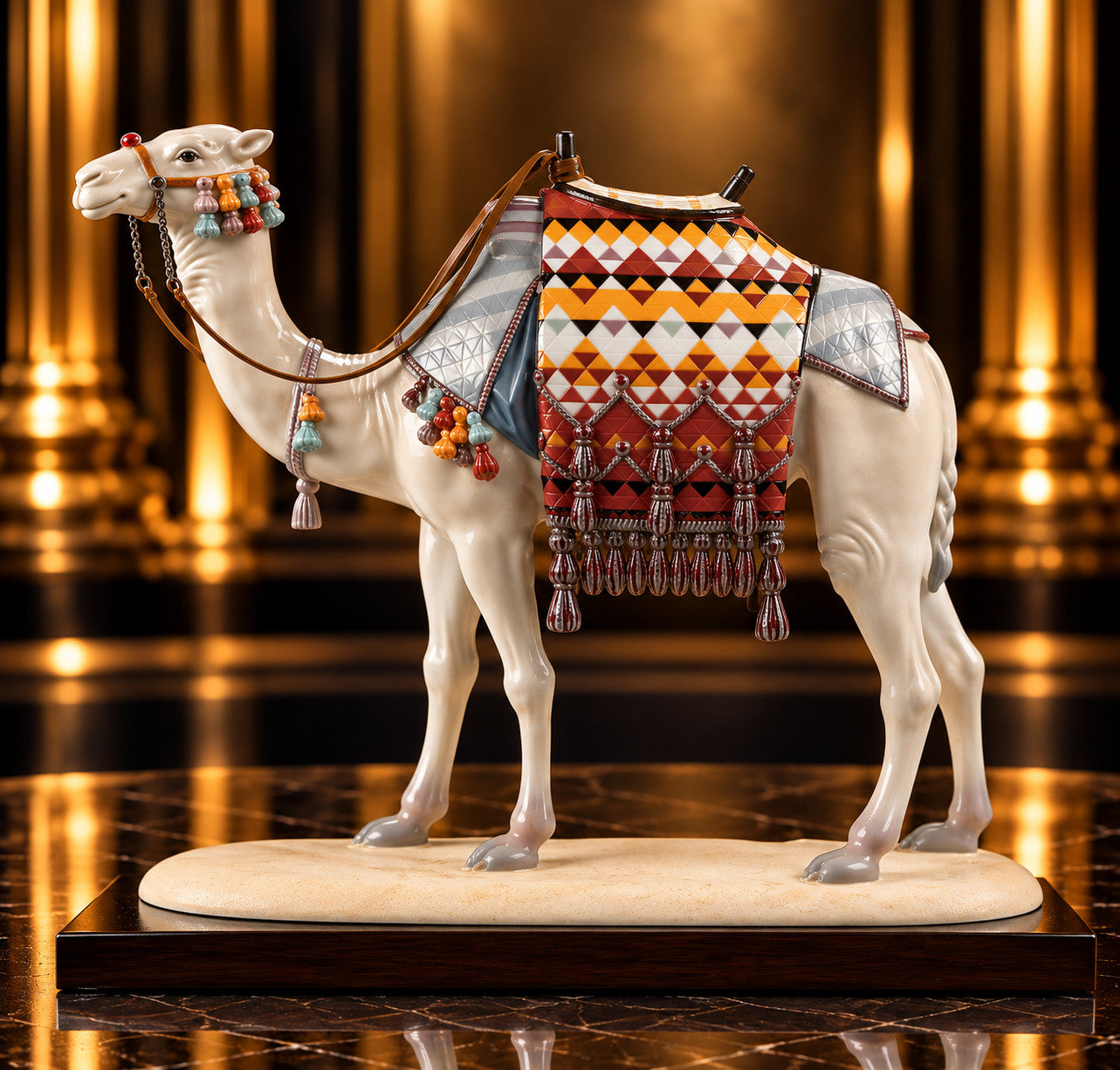
The Camel, sculpted by Alfredo Llorens and issued in 2018 as a Limited Edition of 500, takes a different path entirely.
At 13 inches tall and 16.5 inches wide, the Camel reads as a display piece with real gravity, yet its subject is celebratory rather than dramatic. This is the sculpture for a collector drawn to Lladró's Orientalist tradition, where the animal becomes a vehicle for decorative artistry. The example offered is brand new, complete with original box, paperwork, and display base.
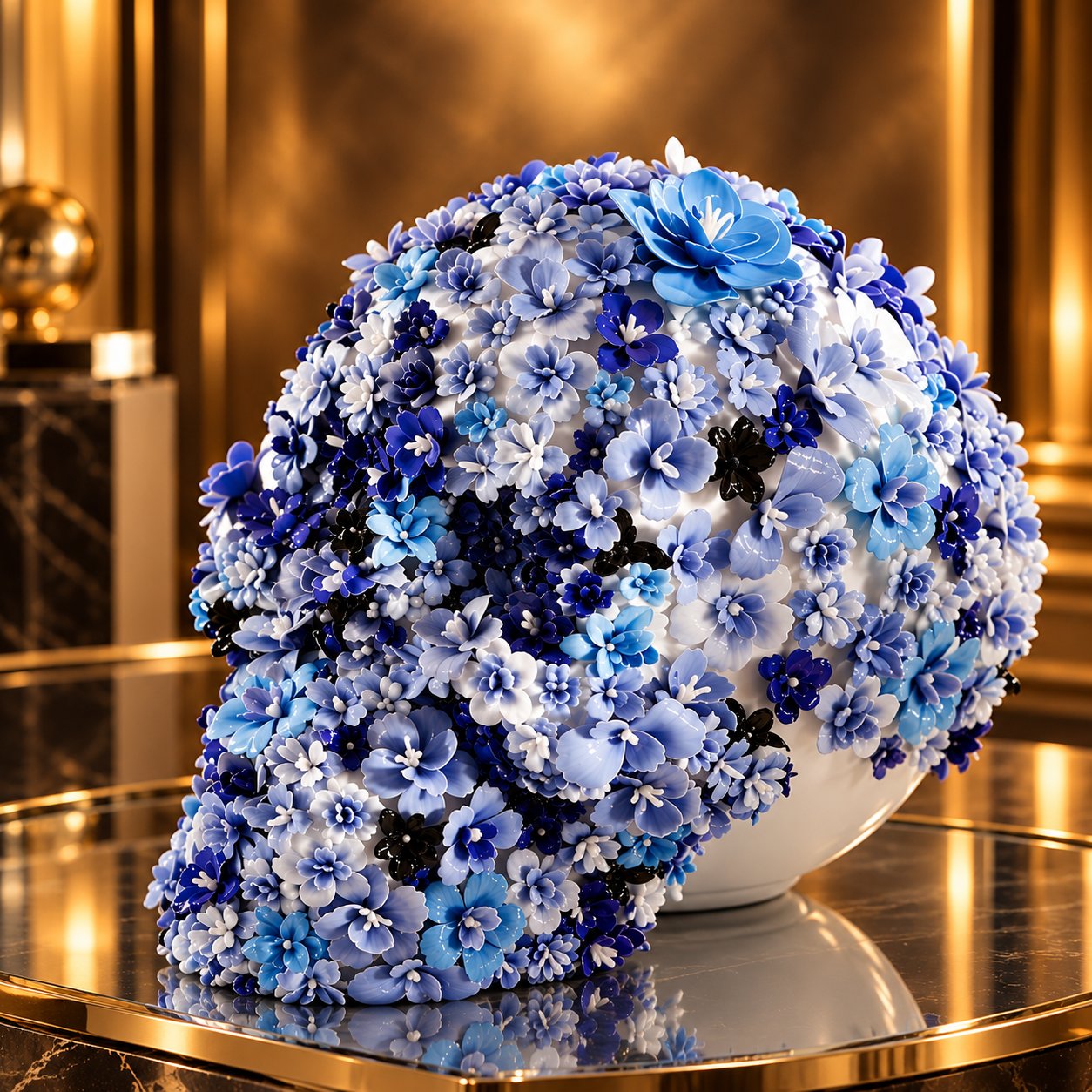
Explore the Camel sculpture for photographs and full specifications.
4. Koi (Blue & Gold) #01009579: Virginia Gonzalez and the Boldblue Collection
Koi (Blue & Gold) is a contemporary statement from Lladró's Boldblue Collection, created by sculptor Virginia Gonzalez and issued in 2022 as a Limited Edition of 750.
The symbolism is part of the appeal: the koi has long been associated with prosperity, perseverance, and good fortune.
This example is located in the United States and is presented in beautiful collector condition. View the Koi listing to confirm its limited-edition status and finish details.
5. Macaw Bird #01009401: A 300-Piece Edition Retired After One Year
Macaw Bird (Blue & Gold) is the shortest-lived piece in this selection.
That combination, a brief window and a small edition, is precisely what collectors watch for.
6. Oriental Lion and Lioness #01001987 / #01001986: Francisco Polope's Guardian Pair
The Oriental Lion and Lioness, both sculpted by Francisco Polope and issued in 2013 as Limited Editions of 1,500, form a matched guardian pair inspired by the traditional guardian lions of Asian art.
Rich green glazes, sculpted curls, and elaborate ornamentation give each piece presence from every angle. At 18.5 inches tall, they are substantial without overwhelming a room.
Polope's Guardian Lion (Blue) #01001991, a High Porcelain edition of 188, is also available from High End Collectibles. Discover more at High End Collectibles if you are assembling a guardian group.
What to Check Before Acquiring a Lladró Animal Sculpture
Condition and completeness decide more than subject matter, and animal sculptures present specific inspection challenges that human figures do not. Tails, ears, foliage, saddle fittings, and outstretched limbs are the thinnest and most exposed elements, and they are where damage most often appears. The checklist below follows the order a careful buyer would work through it.
Identification and Documentation
- Confirm the item number against the base or underside marking, not only against the listing text
- Verify the sculptor attribution and edition size against a reliable source
- Confirm whether the piece is retired, a closed limited edition, or still in production, since these are different categories
Authenticity is the first concern for most new collectors. Where a certificate accompanies the piece, keep it with the work.
Condition Inspection by Sculpture Type
Animal subjects fail in predictable places, and knowing where to look is most of the battle.
- Birds and aviary works. Inspect the beaks, the tips of tail feathers, and any thin foliage or branch elements. The Bird Trio's surrounding leaves and the Macaw Bird's vertical tail are the kind of projections that catch on packing material and shelf edges.
- Hoofed and running animals. Check the legs and hooves, especially on a work like Pursued Deer, where the composition depends on extended limbs and a sense of forward motion. Confirm the base is present, because a monumental piece missing its base is a different proposition entirely.
- Ornamented animals. On the Camel, examine the ceremonial saddle's applied decoration and gold accents for losses or rubbing, since ornament is where handling wear shows first.
- Guardian pairs. On the Oriental Lion and Lioness, inspect the sculpted curls and ornamentation, which are numerous and individually vulnerable.
Ask for clear photographs under neutral light, including close-ups of the extremities and the underside marking. Photographs taken under warm display lighting can soften chips and hide surface wear.
Completeness Standards
Original box, display base, and certificate are not decorative extras; they are part of the object's record. Where a piece is described as new or like new, confirm which of these elements are actually included rather than assumed.
Separating Asking Prices from Sold Prices
An asking price reflects what a seller hopes to receive; a realized sold price reflects what a buyer actually paid. The two can diverge widely for the same sculpture, and the gap tends to widen for pieces with thin trading histories. When judging value, look for dated completed-sale evidence where it exists, treat undated estimates as opinion rather than data, and let condition and completeness drive your decision.
No sculpture is a guaranteed investment. Treat sold-price evidence as a guide, not a promise.
Frequently Asked Questions
Which Lladró animal sculptures are most collectible?
Collectibility usually comes down to edition size, production length, sculptor, and condition. Pursued Deer #01001377 stands out as an Elite High Porcelain edition of 750 pieces issued in 1978, while Guardian Lion (Blue) #01001991 was capped at 188. The Macaw Bird #01009401 had a one-year production run before retirement in 2020. Retirement alone does not make a piece rare; edition size and production length are the factors to weigh.
How can I identify a Lladró animal sculpture?
Start with the item number and the sculptor attribution, and check them against the listing details. For example, Bird Trio carries #01001369 and was sculpted by Salvador Debón, while Camel #01002008 is by Alfredo Llorens. Where present, original boxes, certificates of authenticity, and display bases are part of the piece's documentation.
Are retired Lladró animal sculptures always rare?
No. Retirement means Lladró stopped producing the piece, but it says nothing about how many were made. An open-edition figurine produced for decades can be retired and still be easy to find. Rarity comes from edition size and production length together. Oriental Lioness #01001986, for instance, was a Limited Edition of 1,500 issued in 2013 and retired in 2023, so its scarcity is defined by the edition number, not the retirement date alone.
How can I assess the condition of a Lladró animal figurine?
Confirm the piece includes its original box, base, and paperwork where the listing specifies them, and ask for detailed photographs before committing.
How can I find out what a Lladró animal sculpture is worth?
Separate asking prices from actual sold prices, since listings often sit above what buyers pay. Compare completed sales for the same item number and condition, then weigh edition size, sculptor, and completeness. A piece with its original box, base, and certificate typically commands more than a loose example. Recent sold evidence for scarce editions can be thin, so treat any single result with caution and look at several data points before forming a view.


