


7 Steps to Buying Rare Porcelain Sculptures Online
Last Updated: October 28, 2026
Quick Summary
Buying rare porcelain sculptures online requires setting a purchase budget and insurance ceiling, gathering dated reference sources, and authenticating the mark, base and certificate before you pay. Ask sellers the five key questions in writing, use payment methods with buyer protection, and insure shipping for replacement value.
- Set two numbers first: your purchase budget and your insurance ceiling, which reflects replacement cost.
- Ask for raking-light photos of the base, mark and any repaired area before paying.
- Never pay by wire, friends and family, or cryptocurrency, since none offer buyer protection.
- Insure the shipment for replacement value, not the price you paid.
- Report transit damage to seller and carrier in writing the same day, with photos.
Table of Contents
- What You Need Before You Start Buying Rare Porcelain Sculptures Online
- How to Authenticate Lladró Figurines Before You Pay
- A Rare Porcelain Sculpture Condition Guide for Listings
- Questions to Ask When Buying Porcelain Collectibles
- Valuation, Provenance and Fair Pricing on Retired Pieces
- Porcelain Sculpture Shipping and Insurance, Step by Step
- Add a Rare Lladró to Your Collection
- Frequently Asked Questions
What You Need Before You Start Buying Rare Porcelain Sculptures Online
Buying rare porcelain sculptures online rewards preparation more than speed. Collectors can set a budget, gather reference material and understand authentication before they browse. This guide walks you through seven steps, from budgeting to unboxing, for sourcing retired and limited-edition Lladró works.
A note on sourcing: buying rare porcelain sculptures online puts you in front of sellers you will never meet in person. The checklist below replaces that handshake with process.
Set a Budget and an Insurance Ceiling
Start with two numbers, not one: what you will pay and what you will insure the piece for. Those are rarely the same figure.
Your purchase budget covers the hammer price plus shipping, import duties and any restoration you may want later. Your insurance ceiling should reflect replacement cost, which for a retired limited edition can sit above what you paid. Insurers want documentation, so keep every invoice and certificate together from day one.
Set the ceiling before you fall in love with a piece. Browsing elite limited editions shows real price tiers so you can set a realistic budget and insurance ceiling. It is far easier to walk away from a listing than to argue with yourself after the fact.
- Purchase budget: price + shipping + duties + a restoration reserve
- Insurance ceiling: replacement value, reviewed annually
- Paperwork: invoice, certificate, photographs, condition notes
Gather Your Reference Sources
You need a small reference library before you need a shopping cart. Collect reference materials for the pieces on your wish list.
The most useful references are dated. A 1990s catalogue tells you what a piece looked like when issued, which matters when a listing photo shows a base you have never seen. Save images of authentic bases, marks and certificates alongside the listing photos you are considering.
What most guides miss is that reference gathering is ongoing, not a one-time task. Every purchase should add to your file.
How to Authenticate Lladró Figurines Before You Pay
Authentication is a comparison exercise, not a gut feeling. You are checking three things: the mark, the base and the paperwork. If any one of them looks wrong, stop and ask questions before money changes hands.
Counterfeits exist because the margin is high, and the stories collectors share about reproductions selling for thousands are a fair warning. The defence is boring and effective: verify before you pay.
Read the Maker's Mark and Base
Look at the stamp, the glaze around it and the finish of the base itself.
Ask the seller for a close, well-lit photo of the mark and the full base before you commit.
Match the Edition Number to the Certificate
Ask for photos of the piece and any accompanying certificate. Seeing limited editions with edition sizes and certificates helps you practice matching edition numbers before buying.
A Rare Porcelain Sculpture Condition Guide for Listings
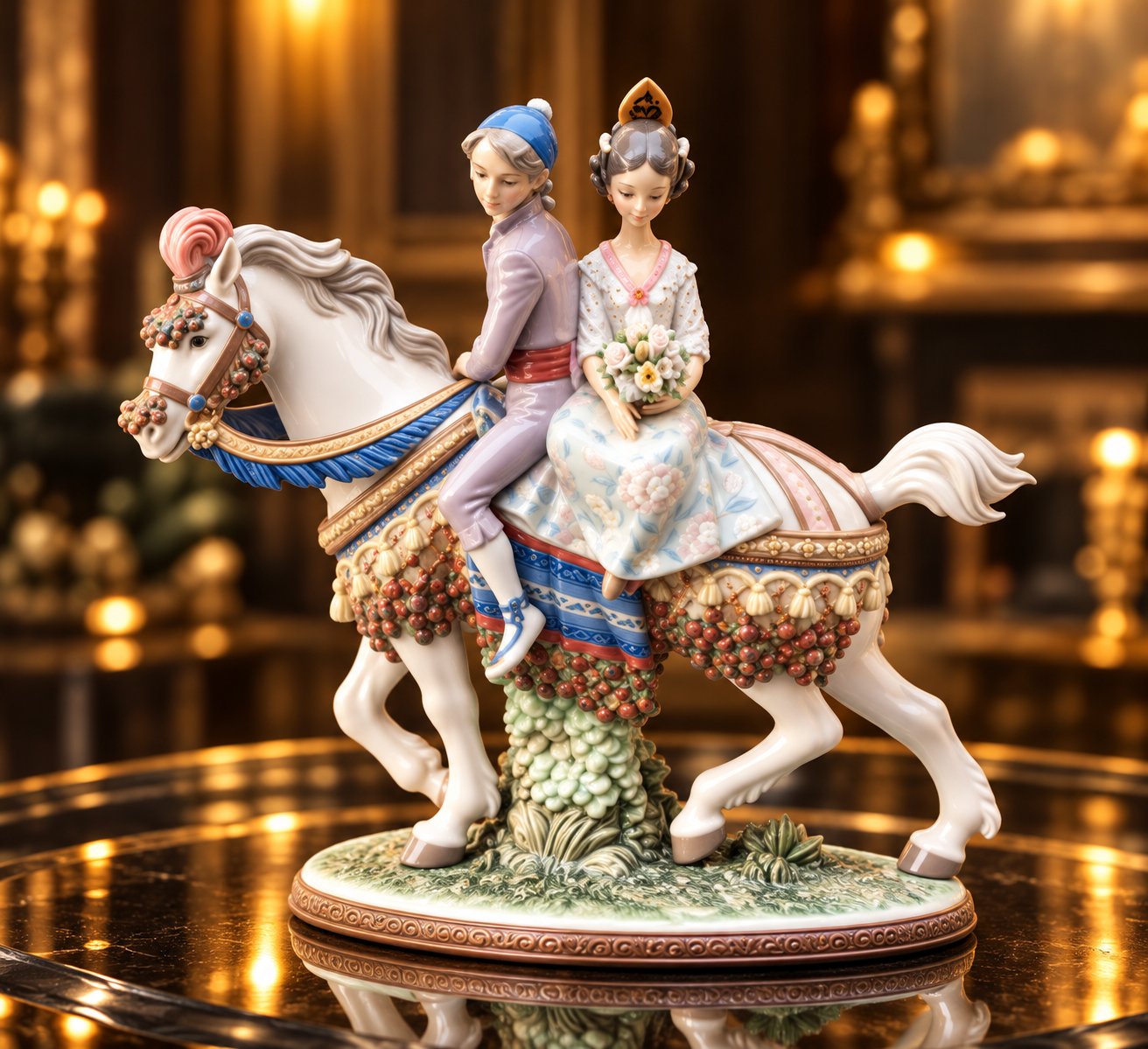
Work through these checks on every listing:
- Glaze: ask for raking-light photos; hairlines show as thin shadows
- Extremities: fingers, petals and thin drapery are where chips appear first
- Repairs: look for colour mismatch, slightly dull patches or a seam that should not exist
- Restoration history: ask directly whether the piece has ever been restored
- Original packaging: box and base add value and signal careful ownership
Grade what you see, not what you hope. A piece described as "excellent" with no base photos is an unknown quantity.
Questions to Ask When Buying Porcelain Collectibles
Most marketplace listings answer the wrong questions. They tell you what the piece is, not whether the seller can be trusted with a fragile, high-value object. Treat the pre-purchase exchange as a structured interview: the answers matter, but so does how the seller answers.
The Five Questions That Reveal the Most
Ask these in writing (email or platform messaging) so you have a record:
LLADRO Guardian Lioness Blue 01001990 NEW IN BOX High Porcelain LE 188 →
- "Can you send a raking-light photo of the base, the mark, and any repaired area?" A seller with the piece in hand can do this in minutes. A seller working from stock photos cannot.
- "Has the piece ever been restored, repainted, or re-glazed, and by whom?" Honest sellers disclose; vague sellers deflect with "looks great."
- "What is the exact edition number, and does the certificate match it?" Ask for a photo of both side by side.
- "What is your return policy if the piece arrives damaged or not as described, and who pays return shipping?" Get the answer in writing before payment.
- "How will you pack it, and will you insure for replacement value?" See the shipping section below for what a good answer sounds like.
Red Flags in Seller Behavior
A confident, honest seller answers quickly, sends extra photos without friction, and volunteers information. Watch for these patterns:
- Pressure to pay outside the platform (bank transfer, wire, friends-and-family payment apps). This removes buyer protection and is the single most common warning sign in online collectible sales.
- Reluctance to provide base or mark photos. Sometimes legitimate (piece in storage), but combined with urgency it is a pass.
- Stock photos only, no date stamp or unique angle. Ask for a photo with a coin or handwritten note beside the piece; honest sellers comply.
- A return policy that excludes "damage in transit" or "item not as described." That is not a return policy; it is a disclaimer.
- A brand-new account selling a rare retired piece at a steep discount. Check seller history, feedback count, and account age before engaging.
Payment Protection Mechanics
Use payment methods that give you recourse: major credit cards, PayPal Goods & Services, or the platform's own escrow-style protection. Credit card chargebacks and PayPal disputes both require documentation, so keep the listing text, your questions, the seller's answers, and all photos in one folder. If a seller insists on a method with no protection, treat that as a decision, not a negotiation.
A Short Seller-Vetting Checklist
- Account age and feedback history reviewed
- At least three recent sales of comparable items
- Base, mark, and certificate photos received
- Return policy confirmed in writing
- Payment method offers buyer protection
- Packing and insurance method confirmed
Valuation, Provenance and Fair Pricing on Retired Pieces
Judge fair pricing against recent comparable sales, not asking prices. A retired elite limited edition with its base gives a concrete example of how retirement and edition size affect fair pricing. Asking prices are wishes; sales are evidence.
Porcelain Sculpture Shipping and Insurance, Step by Step
Shipping is where rare porcelain is most often lost, not to theft, but to poor packing and uninsured transit. A retired limited edition packed in loose bubble wrap is one drop away from a cracked base and a disputed claim. Treat shipping as part of the purchase, not an afterthought.
What Good Packing Looks Like
Professional fragile-item packers follow a double-box method: the sculpture is wrapped, cushioned, and boxed, then that box is floated inside a larger box with at least two inches of shock-absorbing material on every side. Ask the seller to confirm:
- The piece is wrapped in acid-free tissue or soft foam, not newspaper (ink transfers to glaze)
- Protruding elements (fingers, petals, drapery) are individually supported
- The inner box cannot shift inside the outer box
- The outer box is marked "Fragile" and "This Side Up"
Ask for a photo of the packed box before it ships. A seller who packs well is usually happy to show it.
Insurance: Insure the Replacement Ceiling, Not the Price
Insure for what it would cost to replace the piece, not what you paid. For a retired limited edition, replacement cost can exceed the purchase price because the piece may not come to market again soon. Keep the invoice, certificate, and your own photographs, insurers and carriers ask for them when a claim is filed.
Delivery Inspection Protocol
- Inspect the outer box before signing. Crushed corners, punctures, or water stains are grounds to open the parcel in front of the carrier or to note the damage on the delivery receipt.
- Photograph each layer as you unbox. This is your evidence if a claim is needed.
- Check the piece against the listing photos within the seller's return window, glaze, extremities, base, and mark.
- Report damage immediately to both the seller and the carrier, in writing, with photos.
Cross-Border Purchases
Import duties and customs fees are the buyer's responsibility and should be budgeted before checkout. Ask the seller to declare the full value accurately, under-declaring to reduce duties voids insurance coverage on the shipment. For pieces shipping from abroad, confirm the carrier, the tracking method, and who files the claim if damage occurs in transit. A listing that ships from Spain lets you see an international shipping scenario to plan insurance and transit steps.
If Something Goes Wrong
Damage claims usually run through the carrier first, then the seller's insurance, then your payment provider's dispute process. The order matters: file the carrier claim immediately (many carriers have short windows, often 24-72 hours for visible damage), notify the seller in writing the same day, and keep every photo and message. A seller who packed and insured properly will help; one who did neither is the reason this section exists.
Here is the delivery inspection protocol the article lays out, step by step.
| Step | What to do |
|---|---|
| 1 | Inspect outer box before signing; note damage on delivery receipt |
| 2 | Photograph each layer as you unbox |
| 3 | Check piece against listing photos within return window |
| 4 | Report damage immediately to seller and carrier, in writing, with photos |
Add a Rare Lladró to Your Collection
You now have the full workflow: budget and insurance ceiling, reference sources, authentication, condition grading, seller questions, valuation and shipping. That is the difference between a hopeful purchase and a considered one.
HIGH END COLLECTIBLES curates rare, retired and limited edition Lladró masterpieces organised by rarity, artistic heritage and collector demand, with free shipping on select items.
When you are ready, explore the curated collection of rare, retired and limited-edition Lladró masterpieces.
Frequently Asked Questions
How can you tell if a porcelain sculpture is authentic?
Ask for available information about the piece and any accompanying documentation.
What should you check before buying a rare porcelain sculpture online?
Confirm the piece's available listing details and ask the seller any questions you have before buying.
How do you assess the condition of a porcelain figurine from listing photos?
Review the listing photos and description carefully, and ask the seller any questions you have about the piece's condition.
What should you ask about shipping and insurance for a porcelain sculpture?
Ask the seller about the shipping arrangements and any insurance or documentation provided for the piece.
The challenge is not finding rare porcelain; it is buying it with confidence. HIGH END COLLECTIBLES exists to close that gap, with museum-quality Lladró sculptures organised by rarity and artistic heritage, detailed listings and free shipping on select items. Get started with HIGH END COLLECTIBLES and add your next masterpiece to the collection.


