

What Does an Authentic Lladro Sculpture Condition Report Reveal?
Last Updated: October 29, 2026
Quick Summary
An authentic Lladro sculpture condition report reveals the piece's identity, its exact physical state, and its history, recording backstamps, incised marks, chips, cracks, hairline cracks, repairs, and glaze wear. It separates authenticity assessment from condition assessment and uses six standard photographs plus consistent damage terminology, so buyers, sellers, and insurers all see the same documented evidence.
- Read the backstamp first to confirm the production period matches the seller's claim.
- Authentication asks if a piece is genuine; condition asks what state it is in.
- Every report needs six standard photographs, including the underside backstamp and any damage.
- Tilt the piece under raking light, since hairlines and repairs vanish in flat lighting.
- Request photos and a written condition statement before you pay for any piece.
Table of Contents
- Why a Condition Report Decides What a Lladro Sculpture Is Worth
- Lladro Figurine Markings Guide: Reading Backstamps and Incised Marks
- How to Spot Fake Lladro Before You Trust the Condition Report
- Separating Authenticity Assessment From Condition Assessment
- A Photo-Based Condition Report Template You Can Repeat
- Inspecting Fragile Features and Hidden Damage Up Close
- Lladro Appraisal for Insurance: What Documentation Insurers Expect
- Requesting the Condition Report Before You Add to Cart
- Frequently Asked Questions
Why a Condition Report Decides What a Lladro Sculpture Is Worth
An authentic Lladro sculpture condition report is the single most useful document a collector can hold. It records what a piece is, its state, and its history.
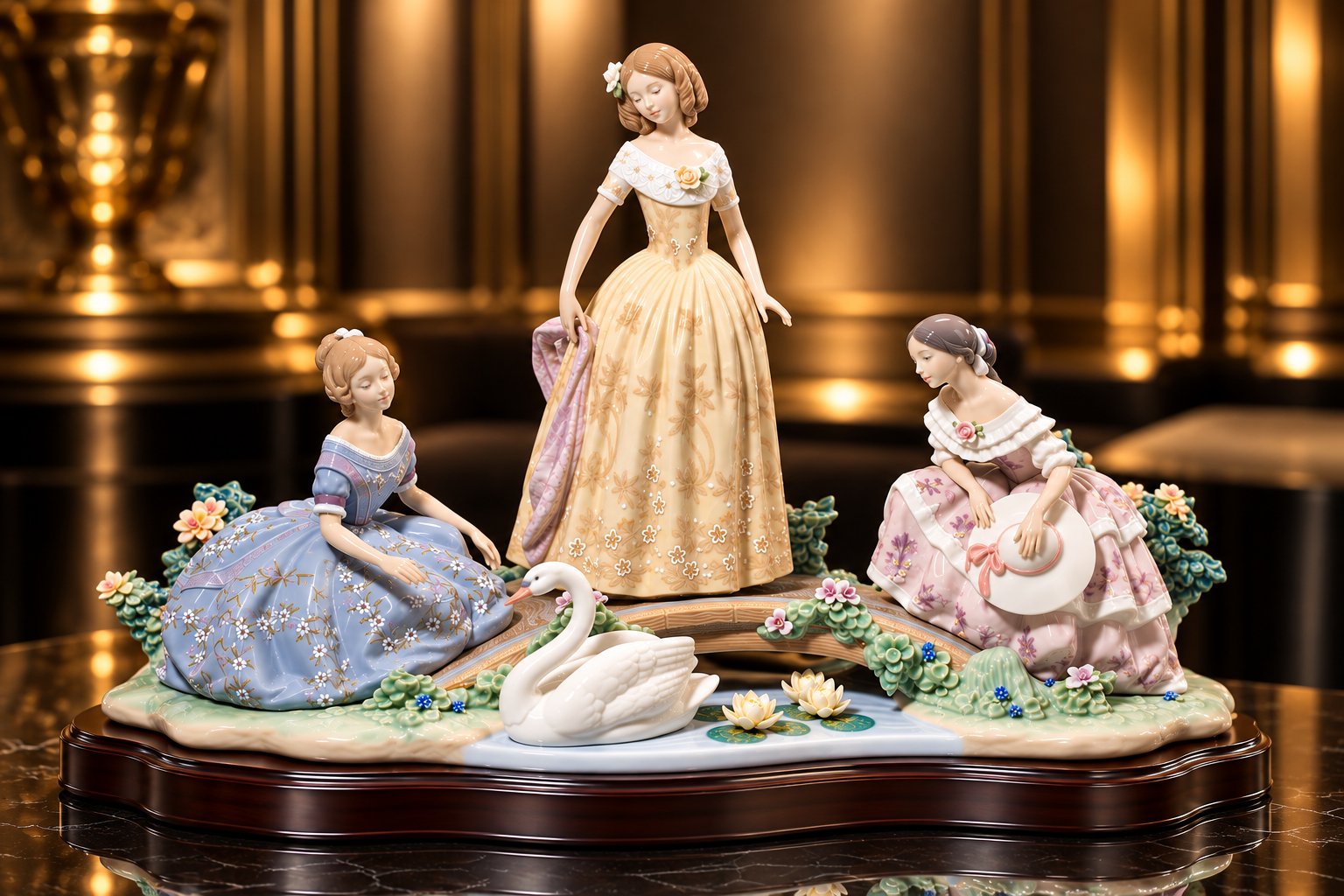
Porcelain is fragile and unforgiving, so buyers pay for certainty. Browse Featured Masterpieces to compare high-value pieces side by side.
Below, we break down what a proper report should reveal, from backstamps to hidden cracks.
Lladro Figurine Markings Guide: Reading Backstamps and Incised Marks
The backstamp is the first thing to read, because it can indicate when a piece was made and whether the mark matches the story being sold.
A backstamp is the printed or stamped maker's mark on the underside of a figurine. It usually carries the Lladro name, a model number, and a production-era design.
What the Backstamp Tells You About Production Period
The style of the mark narrows the production window. A seller claiming a 1960s issue should show a mark consistent with that period.
Watch out: a crisp, modern-looking stamp on a piece described as a 1960s original is a red flag.
Where to Look for Impressed Marks and Signatures
Beyond the printed backstamp, look for incised marks cut into the clay before firing. These can include model numbers, sculptor signatures, and factory marks.
- Check the underside of the base first
- Look along the inner rim
- Inspect the back of the sculpture
Sculptor attribution matters to many collectors, and pieces by named artists such as Joan Coderch or José Puche are sought after. Browse By Sculptor to see attributed works.
How to Spot Fake Lladro Before You Trust the Condition Report
A condition report is only as good as the piece it describes. If the sculpture is a reproduction, the report offers no value.
Fakes fail on small details: glaze too glossy or too dull, soft modeling where it should be sharp, an off-center mark or slightly wrong lettering.
Here is how a buyer can screen a piece before accepting any report:
- Compare the backstamp to known marks for that era
- Check the weight and feel of the porcelain
- Look for seams or mold lines that should not be there
A common mistake is trusting a certificate alone, since certificates can be copied.
Separating Authenticity Assessment From Condition Assessment
These are two different jobs, and mixing them up causes bad buys. Authentication asks "is this a real Lladro?" Condition asks "what state is it in?"
A genuine piece can be in terrible condition; a flawless-looking piece can be a fake. You need both answers, recorded separately.
| Assessment | Question It Answers | Evidence Used |
|---|---|---|
| Authenticity | Is this a genuine Lladro? | Backstamp, incised marks, glaze, modeling |
| Condition | What state is it in? | Chips, cracks, repairs, glaze wear |
| Completeness | What is included? | Box, base, certificate |
| Provenance | Where has it been? | Ownership history, receipts |
Keep the two apart in your notes. A report that blurs them is hard to trust and harder to insure.
A Photo-Based Condition Report Template You Can Repeat
Photographs turn opinion into evidence. A repeatable photo set lets any buyer, seller, or insurer see the same thing you see.

The Six Standard Photographs Every Report Needs
- Full front view in even light
- Full back view
- Underside showing the backstamp
- Close-up of any signature or incised mark
- Close-up of the most fragile area
- Any damage or repair, shot straight on
Recording Chips, Cracks, and Repairs in Consistent Language
Using the same words every time keeps reports comparable.
- Chip: a small piece missing from an edge or surface
- Crack: a line through the body, visible on the surface
- Hairline: a very fine crack, often hard to see
Write "no chips, cracks, or repairs" only when you have checked every fragile point.
RARE Lladró FAR AWAY THOUGHTS #1798 LE 1500 Box COA Base MINT Retired →
Inspecting Fragile Features and Hidden Damage Up Close
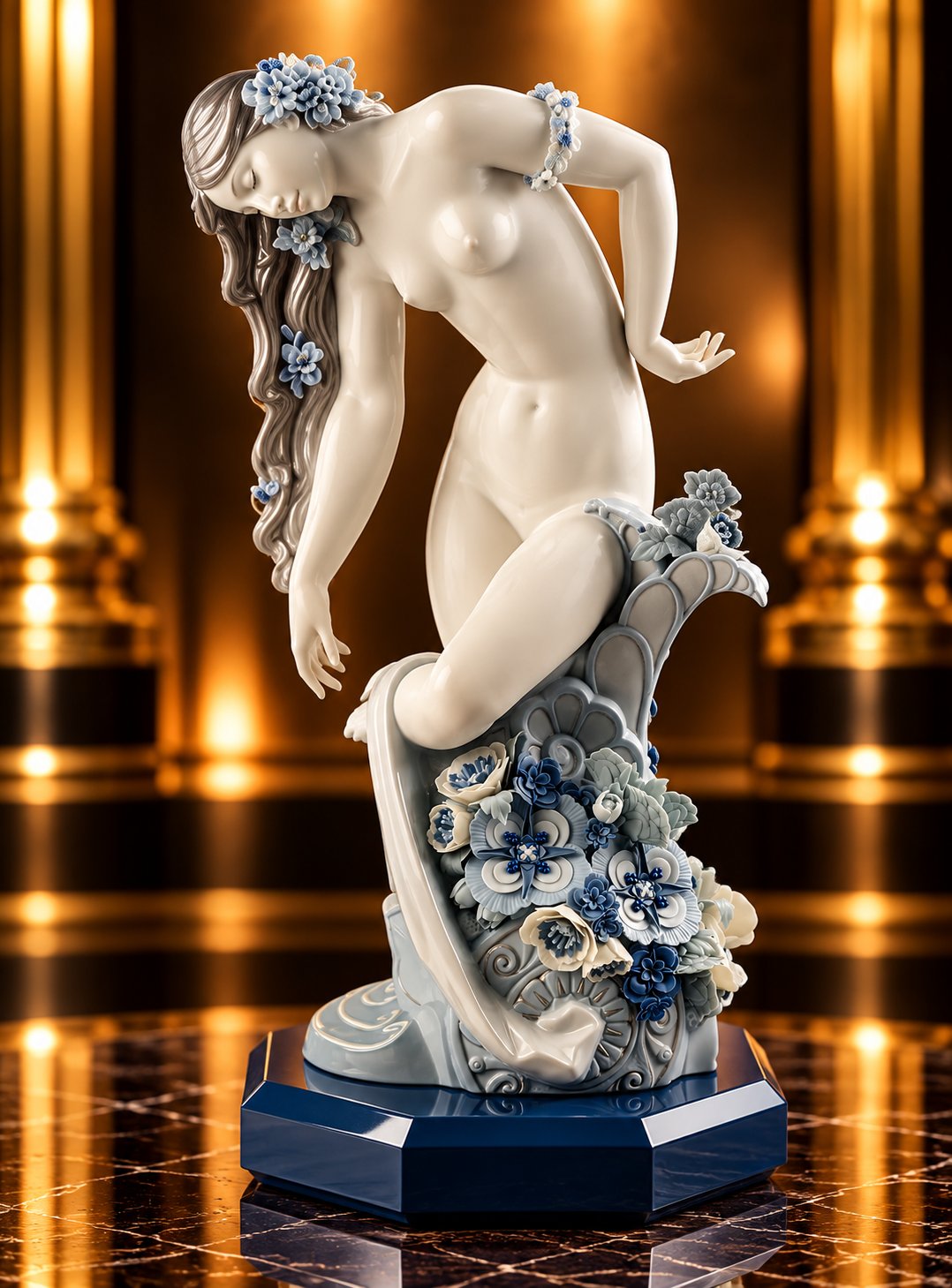
The most valuable pieces are often the most fragile. Flower petals, fingers, ribbons, and thin drapery break first, and repairs hide in exactly those spots. Slow down and work systematically rather than glancing at the front and calling it done.
Set Up Before You Touch Anything
Work on a stable, padded surface at waist height. Wear clean cotton or nitrile gloves; bare hands leave oils that dull glaze. Use a bright, adjustable light plus a magnifier or zoomed phone camera.
Handle from the base with both hands, never by a protruding arm, flower, or hat. Most accidental damage happens during inspection, not shipping.
Work the Piece in a Fixed Order
A repeatable route stops you from skipping areas. A careful inspection often follows this sequence:
- Silhouette first. View straight on from a few feet away. Bends, leans, or gaps often reveal a repair before any close-up does.
- Thin extremities. Check every fingertip, petal, leaf tip, ribbon end, and hat brim. A filled tip can look smooth until you tilt it.
- Joins and seams. A factory join is usually clean and glazed over; a repair join may show a faint ridge, color mismatch, or a line that catches light differently.
- Base and rim. Run a gloved finger along the bottom rim, where chips and flea bites concentrate.
- Surface sweep. Tilt the piece slowly under the light so the glaze catches at a low angle. Hairline cracks and crazing show as fine lines that disappear when viewed straight on.
Read the Light, Not Just the Surface
Hairlines and repairs are often invisible in flat lighting. Move the light to the side and watch how the reflection travels across the glaze. A crack interrupts the reflection; a fill or overpaint reflects slightly differently. A repair blended cosmetically can look perfect straight-on and obvious at a raking angle.
Know What You Are Looking At
Consistent terms make notes meaningful later:
- Chip: a small piece missing from an edge or surface, with a visible break edge.
- Crack: a line through the body, visible on the surface and often felt with a fingernail.
- Hairline: a very fine crack, frequently only visible under angled light.
Record What You See, Not What You Assume
For each fragile area, note the location precisely, "tip of the raised right hand, second finger" beats "hand area." State whether damage is confirmed, suspected, or not visible. "No chips, cracks, or repairs observed at the time of inspection" is honest and defensible; "mint" without evidence invites dispute. If unsure whether a line is a crack or a glaze artifact, say so and photograph it.
Lladro Appraisal for Insurance: What Documentation Insurers Expect
An appraisal for insurance is not the same as a market valuation, and mixing the two is a common documentation mistake. Insurers generally look for a stated replacement-cost basis rather than a quick-resale figure, and the appraisal should state which basis it uses.
What a Defensible Appraisal Contains
Most insurers and appraisers expect the same core elements. A report that includes them is far easier to support when a claim is filed:
- Identification: maker, model name and number, sculptor where known, production period, and dimensions.
- Condition statement: documented condition at appraisal, using consistent damage terminology and noting repairs or losses.
- Photographs: front, back, underside with backstamp, signature or incised mark, fragile areas, and any damage.
Replacement Value Versus Market Value
Replacement value asks what it would cost to buy a comparable piece today, often from a specialist dealer rather than a private sale. Market value asks what the piece would realize in an open sale. For insurance, replacement cost is the usual basis because that is what it takes to make you whole. Ask the appraiser to state the basis explicitly, ambiguity can be questioned at claim time.
Keep the Evidence Trail
Insurers care about the paper behind the number. Keep receipts, certificates of authenticity, the original box and base, and any prior appraisals together with the piece. Completeness supports the claim, and documented provenance strengthens it further. Photograph the piece and its paperwork together so the record is self-contained.
When to Use a Qualified Appraiser
For high-value, rare, or limited-edition pieces, a qualified appraiser with porcelain or decorative-arts experience is worth the cost. Ask what basis they use, whether they inspect in person or from photographs, and what their report will include before you commission it.
Requesting the Condition Report Before You Add to Cart
Ask for the report before you pay. A serious seller should be able to provide photographs and a written condition statement.
Send a short, specific request:
Please send front, back, underside, and signature photos, plus a written condition statement covering chips, cracks, repairs, and whether the original box, base, and certificate are included.
Judge the reply on detail. A seller who answers with close-ups and clear language is telling you something.
Condition is a key factor in serious Lladro purchases, and a documented report is one way to capture it.
Frequently Asked Questions
How can I tell if my Lladro figurine is authentic?
Start with the base. Authentic Lladro pieces are typically marked on the base with the maker's name and a model number. Compare the mark against a known reference for the production period, because stamps changed over the decades. Then check the modelling quality: crisp facial detail, individually crafted flowers, and no seam lines in the wrong places. A complete original box and certificate of authenticity strengthen the case but do not replace a physical inspection of the markings.
Does a small chip significantly decrease the value of a Lladro sculpture?
It depends where the chip sits and how visible it is. A chip on a hidden underside edge affects value far less than damage to a face, hand, or one of the delicate porcelain flowers that define pieces such as Far Away Thoughts. Document the chip with a close photograph and describe its size and location in the report, since buyers and insurers will price the piece on that record rather than on a verbal description.
What should be included in a professional porcelain condition report?
A useful report records the item number, title, sculptor, year issued, year retired, and edition size, then describes condition with evidence. It should list every chip, crack, repair, and missing element with location and size, plus dated photographs of the front, back, base, markings, and any damage. Note whether the original box, display base, and certificate of authenticity are present. End with a clear statement of what was inspected and what could not be verified, so the report separates facts from uncertainty.
How do I document Lladro damage for insurance purposes?
Photograph the damage the day you notice it, with a scale reference in frame and the whole sculpture visible in at least one shot. Keep the piece in the condition it was found and do not attempt cleaning or repair before your insurer responds. Pair the photographs with the purchase receipt, certificate of authenticity, and any prior appraisal, and note the replacement value rather than what you originally paid. A Lladro appraisal for insurance should state the basis of valuation and the date, because insurers reassess replacement cost over time.


