

How to Choose the Best Retired Lladró Figurines for Collectors
Last Updated: November 15, 2026
Quick Summary
The best retired lladró figurines for collectors combine a documented production history, a subject that still moves people, and verified condition. We rank pieces by production window, subject and composition, sculptor attribution, and condition and completeness, so a short run like Singapore Dancers outranks a longer one only when demand exists.
- Retirement only means Lladró ended regular production, not that a piece is rare.
- Singapore Dancers (01005754) was introduced in 1991 and retired in 1993.
- Salvador Debón appears repeatedly on our list of notable retired masterpieces.
- Confirm the model number on the base against the sculpture's official name.
- A mint piece with its box outranks a flawed example of a rarer model.
Table of Contents
- What Makes a Retired Lladró Figurine Worth Collecting
- A Comparison Table of Notable Retired Masterpieces
- How to Identify a Retired Lladró Figurine by Name and Model Number
- Authenticity, Condition, and Completeness: What to Verify Before You Buy
- High Porcelain, Gres, and Glazed: Understanding Lladró Finishes
- Matching Retired Figurines to Your Collector Goals and Budget
- Market Risks and Resale Liquidity for Retired Lladró
- Building Your Retired Lladró Collection with High End Collectibles
- Frequently Asked Questions
What Makes a Retired Lladró Figurine Worth Collecting
The best retired Lladró figurines for collectors share three traits: a documented production history, a subject that still moves people, and a condition that survives close inspection. Retirement is the starting line, not the finish. The ones that hold a collector's attention are rarely the ones that simply stopped being made.
Retirement only means Lladró ended regular production. It says nothing about how many pieces left the factory, how many survived intact, or how many collectors are chasing them today.
Retirement Is Not the Same as Rarity
A figurine retired after two decades in production may exist in large numbers. One retired after a brief run sits in a very different position. Compare two pieces in our own inventory: Singapore Dancers (#01005754) was introduced in 1991 and retired in 1993, a short window that narrows supply. Bird Trio (#01001369) ran from 1978 to 1985, and its real appeal lies in the composition and the sculptor's hand, not the calendar alone.
Watch out: collectors often pay a premium for the word "retired" without checking how long the piece was actually made. Ask for issue and retirement dates before you fall in love with a listing.
A Comparison Table of Notable Retired Masterpieces
The table below compares several retired Lladró figurines by sculptor, production window, finish, and collector appeal.
| Sculpture | Item No. | Sculptor | Retired | Finish | Collector Appeal |
|---|---|---|---|---|---|
| Bird Trio | 01001369 | Salvador Debón | 1985 | Glazed | Nature study, short run, box included |
| Singapore Dancers | 01005754 | Juan Huerta | 1993 | Glazed | Dance subject, two-year production |
| Mariko | 01001421 | Salvador Debón | 1995 | Glazed | Japanese elegance, box included |
| A Mother's Way | 01005946 | Salvador Debón | 1996 | Glazed | Family scene, ornamental tree detail |
| From the Spring | Not listed | José Puche | 1999 | Porcelain | Seasonal allegory, box included |
| The Glass Slipper | 01005957 | José Puche | 2001 | Glazed | Fairytale subject, entry price point |
| Sincerity | 01012422 | Begoña Jáuregui | 2003 | Gres | Gres texture, 17-inch presence |
| Alborada | 01016848 | Francisco Polope | 2004 | Matte, glazed accents | Feminine elegance, 17-inch centerpiece |
| A Rickshaw Ride | 01001383 | Salvador Debón | 2005 | Glazed | Asian scene, wood base and box |
How We Ranked These Pieces
Ranking retired Lladró is not a matter of headline prices. Most experienced collectors weigh four factors, and we applied the same order here:
- Production window. A short run narrows supply, but only when demand exists. Singapore Dancers, made for roughly two years, sits high on this criterion; Bird Trio's 1978-1985 window is longer but its compact nature composition keeps it sought after.
- Subject and composition. Dance, Japanese, and family themes have durable collector bases. A Rickshaw Ride rewards anyone building an Asian-themed display, while Alborada and Sincerity offer scale for a cabinet's center.
- Sculptor attribution. Salvador Debón appears repeatedly on this list for good reason, his modeling of figures and animals is closely studied by collectors. José Puche's allegorical and fairytale subjects appeal to a different sensibility.
- Condition and completeness. A box and certificate support both value and insurance documentation. A mint piece with its box outranks a flawed example of a rarer model for most buyers.
Reading the Table Like a Collector
Each piece earns its place for a different reason. Bird Trio rewards the collector who values a compact, richly detailed nature composition. Singapore Dancers suits anyone building a performing-arts theme.
A low model number or an early retirement date does not by itself make a piece a better buy. Confirm issue and retirement dates, sculptor attribution, and finish against documented records before you treat any listing as a candidate.
When you are ready to see them side by side, browse the Featured Masterpieces in our gallery.
How to Identify a Retired Lladró Figurine by Name and Model Number
Identification starts with the model number, usually written on the underside of the base. Lladró item numbers are often listed with a leading zero, as in #01001250. Match that number against the sculpture's name before anything else.
Collectors should confirm four details:
- Name and item number agree with each other
- Sculptor attribution matches documented records
- Issue and retirement dates fall within a plausible window
- Finish matches the piece as described
A common mistake is trusting a seller's title alone. Listings sometimes carry a nickname rather than the official name.
Lladró's official heritage and collector resources can help confirm a sculpture's official name when a listing is unclear. Treat any number that does not resolve to a documented piece as a reason to pause.
Authenticity, Condition, and Completeness: What to Verify Before You Buy
Authenticity rests on the maker's mark, the finish, and the paperwork that travels with the piece. Before you commit, verify the base mark, inspect the glaze under good light, and ask what accompanies the sculpture.
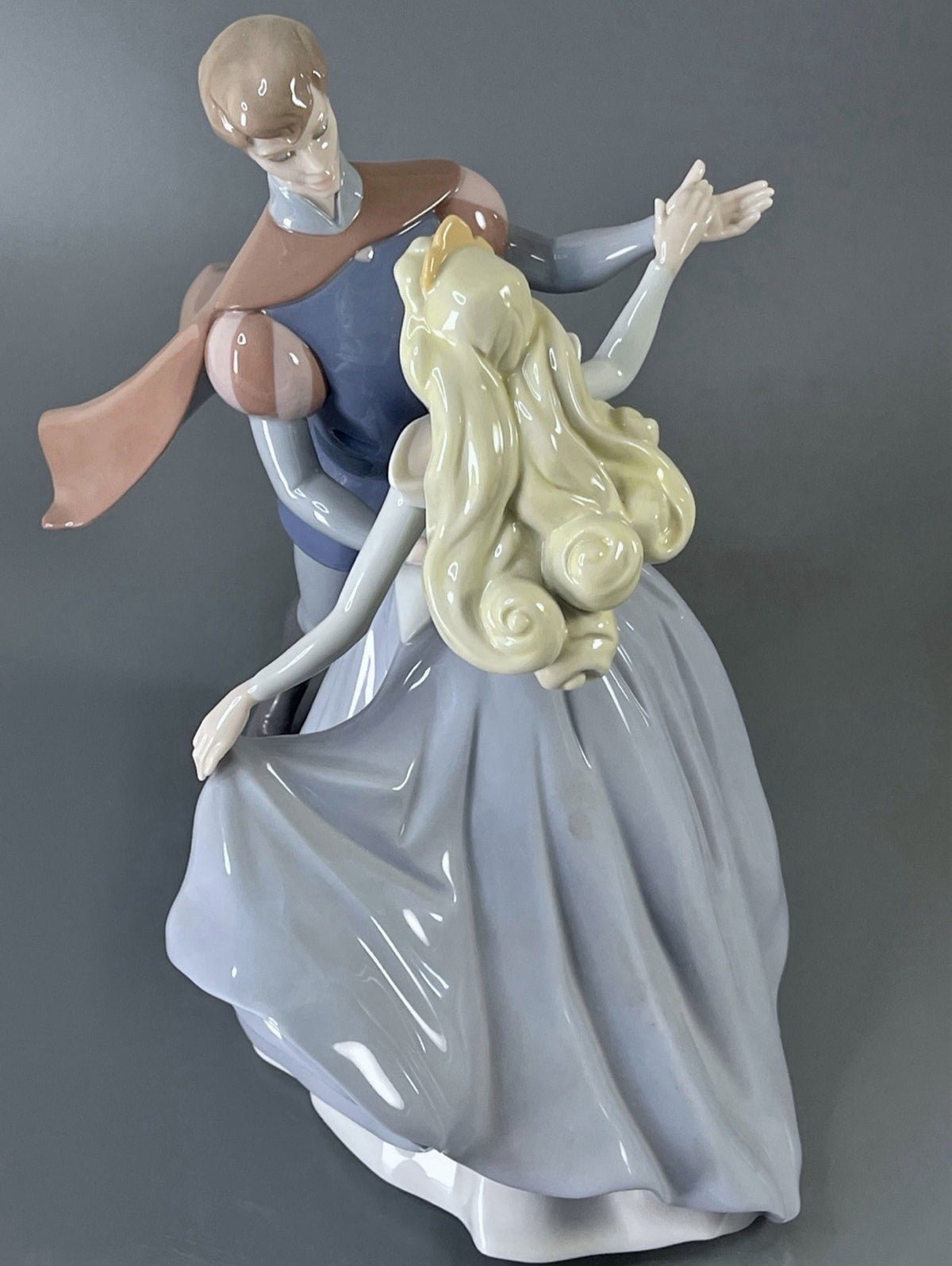
Reading the Maker's Mark and Glazed Finish
The maker's mark on the base is your first authenticity check, and it should sit cleanly under the glaze rather than on top of it. A mark that looks painted on, uneven, or applied after firing deserves scrutiny.
Glazed finishes should read smooth and even, with color that sits deep in the surface. Look for hairline cracks, chips at the extremities, and any area where the sheen changes abruptly.
Completeness matters too. Original packaging and a certificate of authenticity support both value and insurance documentation.
High Porcelain, Gres, and Glazed: Understanding Lladró Finishes
Finish shapes both the look and the collector market for a retired piece. Lladró works in three broad families, and each behaves differently on a shelf and in a collection.
Glazed porcelain carries a glossy, luminous surface that deepens color and catches light. Most classic Lladró figurines use it, including Lovers from Verona (#01001250) and Mariko.
Sincerity (#01012422) is listed with a Gres finish.
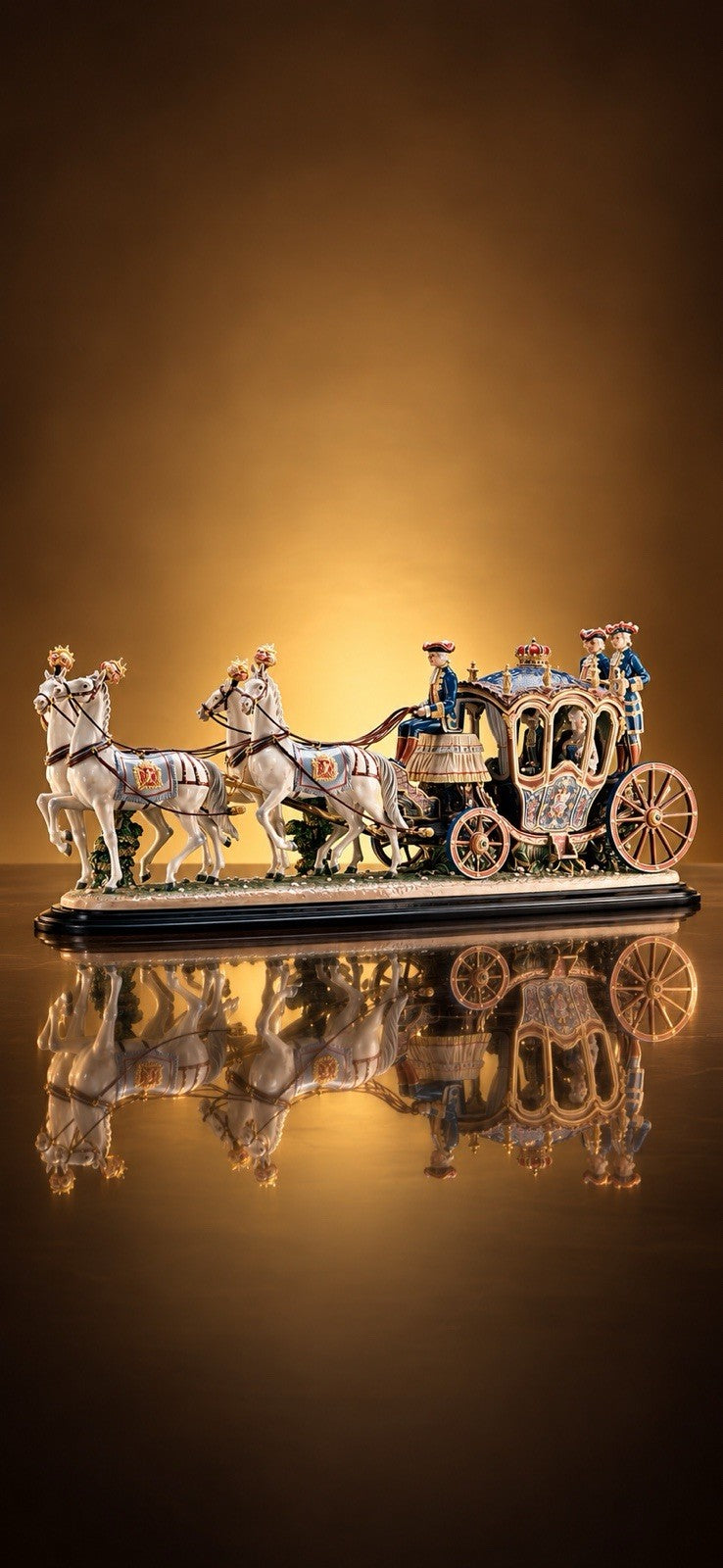
High Porcelain represents the upper tier of the craft, with elaborate detailing and a more limited production approach. A piece like the Lladró 18th Century Coach 01001485 High Porcelain Elite Limited Edition shows what that tier looks like in practice, with its carriage, figures, and display base.
Alborada is listed with a matte finish and glazed accents.
Matching Retired Figurines to Your Collector Goals and Budget
The right retired figurine depends on what you are building. A thematic collector, an investor, and a decorator should each weigh different factors. Rather than start with a price ceiling, start with a goal, then let condition and completeness set the realistic range within it.
A Practical Grading Framework: Condition, Completeness, and Provenance
Most practitioners assess a retired Lladró on three axes before discussing value. Use this framework to compare pieces on equal terms.
Completeness. Original packaging and a certificate of authenticity support both value and insurance documentation.
Provenance. Ownership history matters most for limited editions and High Porcelain.
A seller's "mint" description should be checked. Ask specifically about chips, cracks, and any restoration history, and treat vague answers as a reason to pause.
Recommendations by Collector Goal
With that framework in hand, match the piece to the goal:
- Completing a series: prioritize the exact piece that fills the gap, even if condition is only very good. Accept a missing box if the model is scarce, but document the shortfall.
- Building a theme: dance, Japanese, or romantic subjects each have a natural home, such as our Dancers & Performing Arts Collection. Buy the best-conditioned example you can find within the theme rather than the first one listed.
- Cultural and spiritual themes: collectors drawn to Indian subjects can explore the Hindu / Indian Collection. Provenance and completeness carry extra weight here because these pieces are often displayed as centerpieces.
- Display and decor: scale and finish matter more than edition history. A 17-inch matte-and-glazed piece like Alborada reads differently in a room than a compact glazed study like Bird Trio.
- Long-term holding: favor documented sculptors, strong subjects, and complete packaging.
Setting a Budget That Follows Condition
Budget should follow condition and completeness, not the other way around. A mint piece with its box and certificate is worth more of your budget than a flawed example of a rarer model. Decide your ceiling before you start browsing, hold it, and reserve part of it for the pieces that arrive complete and well documented. When two candidates sit at similar cost, choose the one with the cleaner inspection and the fuller paperwork, it will be easier to live with and easier to pass on.
Market Risks and Resale Liquidity for Retired Lladró
Retired Lladró carries real resale considerations, and honest collectors should understand them before buying. Liquidity varies by subject, condition, and how the piece is presented at resale.
Asking prices online are not sold prices, and buyers should compare recent sales before relying on any figure.
We never describe porcelain as a guaranteed investment. Values can rise or fall with collector demand, and no dealer can promise appreciation. What a careful buyer can do is buy well: verify condition, confirm authenticity, keep documentation, and choose subjects with lasting artistic merit.
Building Your Retired Lladró Collection with High End Collectibles
A considered collection grows one verified piece at a time. Start with a subject you genuinely love, confirm the item number and condition, and keep every document that arrives with the sculpture.
At High End Collectibles, we curate Rare & Retired Lladró Masterpieces and organize them by rarity, artistic heritage, and collector demand.
Explore the Masterpiece Gallery to see the rare and retired sculptures currently available, and let us help you find the piece your collection has been missing.
The difference between a good collection and a great one usually comes down to patience and verification.
Frequently Asked Questions
Which retired Lladró figurines are most valuable?
Value depends on more than retirement status. Pieces with short production windows, verified sculptors, and mint condition tend to draw the strongest collector interest. Examples in the High End Collectibles catalogue include Bird Trio #01001369, introduced in 1978 and retired in 1985, and Singapore Dancers #01005754, issued in 1991 and retired in 1993. Both had brief production periods, which collectors often associate with scarcity. Always compare recent sold prices rather than asking prices, and confirm condition, original packaging, and documentation before treating any figure as valuable.
Are retired Lladró figurines worth more than current releases?
Not automatically. Retirement means a piece is no longer in regular production, but it does not guarantee a higher value. Demand, condition, completeness, and the sculptor's reputation all influence what a retired Lladró figurine is worth. Some retired pieces trade near or below their last retail price, while others attract premium interest. Check recent sold prices for the specific model number, verify the maker's mark and glazed finish, and factor in whether the original box and any certificate of authenticity are included before assuming retirement adds value.
How can you tell if a Lladró figurine is retired?
Start with the model number on the base and compare it against official Lladró production records or a reputable dealer's listing. Retirement dates are often documented alongside the issue date. A piece listed as retired should no longer appear in current Lladró catalogues. Confirm the maker's mark, the finish, and the item number match the documented sculpture, and ask the seller for the production history. Retirement alone does not establish rarity, so pair this check with a condition inspection and a review of recent sold prices.
What should collectors check before buying a retired Lladró figurine?
Inspect the maker's mark and item number, confirm the finish matches the documented sculpture, and look closely for chips, cracks, or restoration. Ask whether the original box and certificate of authenticity are included, since completeness supports provenance and insurance documentation. Compare recent sold prices rather than asking prices, and confirm the seller's authentication process.


