

Identifying Retired Lladró Porcelain Marks: A Collector's Guide
Table of Contents
- Where to Find the Maker's Mark on a Lladró Figurine
- Understanding Backstamps and Base Marks Across Production Periods
- Lladró Marks Identification: Reading and Interpreting Stamps
- Dating a Figurine from Its Mark and Production Details
- Lladró Figurine Model Numbers: Finding and Using Them
- How to Spot Fake Lladró: Authenticity Checks and Counterfeit Warning Signs
- Retired Lladró Figurine Value: What Marks Tell You About Investment Potential
- Step-by-Step Identification Workflow: From Mark to Authentication
- Frequently Asked Questions
Last Updated: October 19, 2026
Where to Find the Maker's Mark on a Lladró Figurine
The maker's mark on a Lladró figurine appears on the underside or base of the piece, and understanding retired Lladró porcelain marks is essential for collectors. This is where you'll find the most crucial information for authentication and dating.
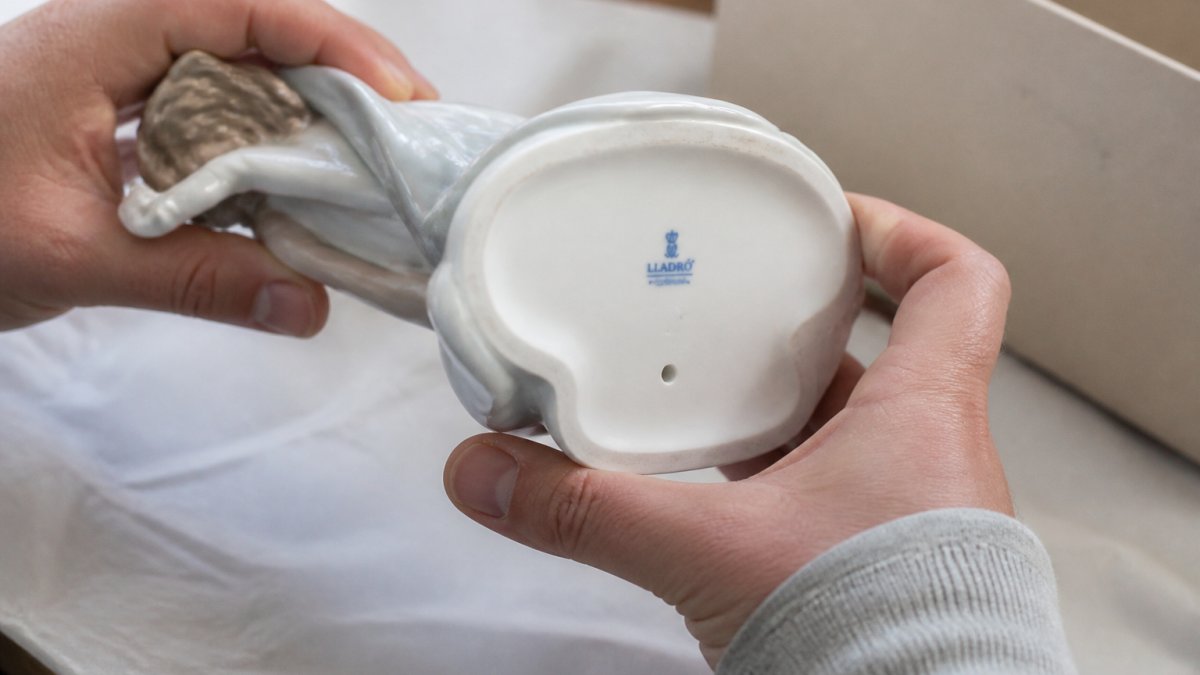
Checking the Base and Underside
Turn the figurine over carefully. The base is flat and usually smooth. Look for any impressed or printed marks. These marks tell you everything: the factory, the production period, the model number, and whether the piece is retired.
Most authentic Lladró pieces have a clear mark on the bottom. If you see nothing, that's a red flag. Genuine pieces from the 1970s onward almost always carry identifying information on the base.
Inspecting the Interior Cavity
Some Lladró figurines have a hollow interior. If your piece is hollow, check inside the cavity as well. Occasionally, marks appear on the interior walls. This is less common than base marks, but it happens.
Shine a flashlight into the cavity. Move it around slowly. Look for any impressed text or symbols. Interior marks are typically smaller and less distinct than base marks, but they provide valuable confirmation data.
Understanding Backstamps and Base Marks Across Production Periods
The backstamp is the printed or impressed mark found on the base. Lladró changed its backstamp design multiple times throughout its history. Each era has a distinct visual signature. Learning these signatures is essential for dating a figurine accurately.
Backstamps evolved as the company grew and adapted to market demands. Early marks differ dramatically from later ones. This progression is your roadmap for identifying when a piece was made.
Blue and Cobalt-Blue Printed Marks
The most iconic Lladró mark is the blue printed stamp. This blue stamp became the company standard for decades.
Early blue stamps from the 1970s used a deeper cobalt blue. The lettering was hand-drawn in appearance. By the 1990s, the blue became lighter and the lettering more standardized.
If you see a blue mark, examine it closely. The color intensity matters. Deep, rich cobalt blue typically indicates an older piece.
Company Name and Logo Variations
Lladró's company name appears differently across production periods. Early pieces show "Lladró" with an accent mark. Later versions sometimes dropped the accent or adjusted the lettering style.
The logo evolved too. The company initially used a simple text mark. Over time, they introduced stylized versions with decorative elements.
Look at how the company name is written. Compare it to reference guides. Inconsistencies in spelling, spacing, or font style are warning signs.
Floral Emblem and Trademark Evolution
Many Lladró marks include a floral emblem or decorative element. This emblem served as a trademark.
Early marks featured a simple, delicate flower. This evolved into a more elaborate, stylized design. By the 2000s, the emblem became more geometric and modern.
The floral emblem is one of the easiest dating tools. Once you know what each version looks like, you can quickly narrow down the production period.
Lladró Marks Identification: Reading and Interpreting Stamps
Reading a Lladró mark requires patience and attention to detail. Not every mark is immediately clear. Some are worn. Others are partially obscured. Your job is to extract whatever information remains visible.
Start with what you can see clearly. Move to what's faint. Build your picture piece by piece. This systematic approach works even on damaged or heavily used figurines.
Decoding Factory Marks and Model Information
Factory marks tell you where the piece was made. Lladró operated multiple facilities. Each location had a designated mark or code. This information helps verify authenticity.
Model numbers appear on most marks. A model number like "1004" or "5207" tells collectors exactly which figurine they own.
Some marks include artist or sculptor initials. These initials indicate who designed the piece. Certain sculptors are highly sought after. Their work commands premium prices among collectors.
Recognizing Seconds Marks and Quality Control Indicators
Lladró marked some pieces as "seconds." These figurines had minor flaws that didn't meet the company's strict standards.
A line drawn through the mark means the piece was sold at a discount. These figurines are authentic but worth less than first-quality pieces.
Quality control marks vary. Some show a simple slash. Others use an "S" or other indicator. Learn what your mark says. This affects both authenticity and value.
Dating a Figurine from Its Mark and Production Details
The mark on your figurine is your primary dating tool.
Lladró's mark evolution follows a clear timeline. The company didn't randomly change designs. Each change corresponded to business milestones or strategic decisions.
Most figurines made before 1970 have very simple marks. Pieces from 1970-1980 show early blue stamps. The 1980s-1990s introduced more elaborate designs.
Compare your figurine's mark to reference materials. Look for exact matches. This method works for retired pieces and current production alike.
Lladró Figurine Model Numbers: Finding and Using Them
The model number is printed or impressed alongside the company name on the base. It's typically a four-digit or five-digit number. This number is your key to unlocking detailed information about the figurine.
Model numbers connect directly to official Lladró catalogs. Collectors maintain extensive databases of these numbers. When you have the model number, you can find:
- The figurine's official name
- The artist or sculptor who designed it
- The year it was introduced
- The year it was retired (if applicable)
- Approximate market value
- Known variations or color options
Write down the model number exactly as it appears. Don't guess at faint digits. Take a photo if necessary. This number is your entry point to the collector community and pricing databases.
How to Spot Fake Lladró: Authenticity Checks and Counterfeit Warning Signs
Counterfeits exist. They're becoming more sophisticated. Your ability to spot fakes protects your investment. Several telltale signs reveal reproductions.
Authentic Lladró figurines have consistent quality throughout. The porcelain feels smooth. The glaze is even. The paint is crisp. Fakes often show inconsistencies. The porcelain feels rough or chalky. The glaze has uneven patches.
Examining Mark Quality and Consistency
The mark itself is your first authenticity test. Genuine marks are crisp and consistent. The letters are uniform. The color is steady. Counterfeit marks often show irregularities.
Look at the mark under magnification. Use a loupe or magnifying glass. Genuine marks have clean edges. Fake marks often show bleeding ink or fuzzy edges.
The mark should be proportional to the figurine's size. Very small figurines have small marks. Large pieces have larger marks. Disproportionate marks suggest counterfeits.
Assessing Porcelain Finish and Glaze
Authentic Lladró porcelain has a distinctive feel. It's smooth, cool to the touch, and has a subtle sheen. The glaze is uniform without visible brush strokes or drips.
Run your finger across the surface. It should feel consistently smooth. Rough patches or grainy texture indicate poor-quality reproductions. The glaze should be glossy but not overly shiny or plastic-looking.
Examine the colors. Genuine Lladró uses specific color palettes. The paints are matte or semi-gloss, never bright or neon.
Identifying Reproduction and Counterfeit Red Flags
Several specific warning signs indicate fakes. Weight is one. Authentic Lladró feels substantial for its size. Counterfeits often feel too light or too heavy.
The base should be smooth and flat. Rough or uneven bases suggest fakes. The edges of the base should be finished cleanly.
Look for consistency in design details. Authentic pieces maintain precise proportions. Fakes often have distorted features, misaligned limbs, or uneven facial features. Compare your piece to reference photos.
Retired Lladró Figurine Value: What Marks Tell You About Investment Potential
Retired pieces command higher prices than current production, and retired Lladró porcelain marks help identify which figurines are no longer in production. The retired Lladró figurine value depends on several factors. The mark reveals some of this information. The production period affects value. Older pieces often cost more.
The mark tells you when the piece was made. Pieces from the 1970s-1980s typically cost more than 1990s-2000s pieces. The earlier the production date, the higher the potential value.
Retirement Status and Mark Significance
Not all marks indicate retirement status. The mark itself doesn't always say whether a piece is retired.
A retired piece is no longer in production. This scarcity increases value. Current production pieces are worth less. The mark helps you determine which category your figurine falls into.
Research the model number. Check whether Lladró still produces this design. If it's retired, note the retirement year. Earlier retirements typically mean higher value.
Step-by-Step Identification Workflow: From Mark to Authentication
Follow this systematic approach every time you examine a figurine.
Step 1: Prepare your workspace. Use good lighting.
Step 2: Examine the base. Turn the figurine over carefully.
Step 3: Read the mark. Start with what's clearly visible.
Step 4: Identify the mark style. Compare your mark to reference guides.
Step 5: Extract the model number. Locate the four or five-digit number.
Step 6: Cross-reference the model. Search collector databases or official Lladró catalogs.
At HIGH END COLLECTIBLES, we organize our collection by rarity, artistic heritage, and collector demand.
Authenticating retired Lladró figurines requires careful attention to marks, production details, and manufacturing quality. Our curated inventory features rare and retired designs that serve as genuine artistic investments. Add to cart to explore our exclusive collection of retired Lladró figurines.
Frequently Asked Questions
Where can I find the mark on a Lladró porcelain figurine?
The maker's mark on a Lladró porcelain figurine is located on the underside or base of the piece. Examine the bottom carefully for a printed or impressed backstamp. Some figurines also have marks inside interior cavities or hollow sections. Always inspect the entire base area, including the outer ring and center, as marks vary in size and placement depending on the production period and model.
How can I tell if a Lladró figurine is authentic by examining its marks?
Authentic Lladró figurines display clear, consistent backstamps with the company name, logo, and often a model number. Check that the blue or cobalt-blue printed mark is sharp and evenly applied, fuzzy, faded, or poorly aligned marks are counterfeit warning signs. Verify the mark style matches the production period you expect. Examine the porcelain glaze and finish around the mark; genuine pieces show smooth, professional application without rough edges or discoloration that suggests reproduction.
What do model numbers and catalog numbers on Lladró marks mean?
Model numbers and catalog numbers on Lladró figurine marks identify the specific design and help trace production details. These numbers allow collectors to determine the exact figurine, confirm retirement status, and research historical production data. Cross-referencing the model number with Lladró reference guides reveals the sculptor, designer, production period, and whether the piece is retired. This information directly impacts the figurine's collector value and authenticity verification.
How do mark variations help me date a retired Lladró figurine?
Lladró changed its backstamp design, company logo, and trademark elements across different production periods. Earlier figurines feature different mark styles than later ones, for example, logo evolution, changes in the floral emblem, and variations in how the company name appears on the base. By comparing your figurine's mark against documented mark history and production timelines, you can narrow down the manufacturing date and confirm whether the piece is from a retired series, which is essential for valuation and authentication.


