

Are Lladró Mythology Edition Sizes Worth Checking?
Last Updated: November 19, 2026
Quick Summary
An edition size is the number of pieces made in a Lladró mythology sculpture's run, shown on the base or in its documentation. It describes production, not value, so a smaller run means fewer examples exist but does not guarantee higher prices. Always verify edition sizes against the piece itself and its official record.
- A limited edition has a fixed cap, while an open edition has no fixed cap.
- Retirement is not the same as limited production, so confirm the exact edition wording.
- Check the edition fraction on the base against the item number and official record.
- Condition, completeness and provenance matter alongside the edition size.
Table of Contents
- What an Edition Size Actually Tells You
- Limited Edition Versus Open Edition: Reading the Difference
- Mythology Sculptures and Their Edition Ranges
- Does a Smaller Edition Always Mean Greater Rarity?
- Identifying Numbered and Limited Markings on the Base
- Verifying Edition Information Before You Buy
- Finding Your Next Mythology Piece at High End Collectibles
- Frequently Asked Questions
What an Edition Size Actually Tells You
When you look at a Lladró mythology sculpture, the edition size is one of the first details collectors check. A number like 1,000 or 750 appears on the piece or in its documentation, and it signals how many examples were made. Reading that number well helps you judge how a piece fits into your collection and whether it deserves a closer look.
Edition size describes production, not value. A small run can make a sculpture harder to find, but it does not guarantee that the piece will rise in price. Many buyers at High End Collectibles start here because a clear understanding of the number keeps their expectations realistic.
Keep these points in mind as you read:
- A smaller run means fewer pieces were made in total.
- A number alone does not confirm condition, authenticity or completeness.
- Edition details should always be checked against the piece itself.
Limited Edition Versus Open Edition: Reading the Difference
The two terms describe different production approaches. A limited edition has a fixed, announced number of pieces, and production stops once that number is reached. An open edition has no fixed cap and may continue for as long as the manufacturer chooses.
This difference matters because it shapes how many examples exist. A limited edition has a defined ceiling, while an open edition does not. That said, collectors should verify each claim rather than assume it from the category alone.
Watch for these common points of confusion:
- Retirement is not the same as limited production. A retired open-edition piece can still be widely available.
- A limited edition label should match the documentation or the number recorded for the piece.
- Dealers sometimes use the words loosely, so confirm the exact wording before you buy.
Mythology Sculptures and Their Edition Ranges
Mythology is one of the most collected themes in Lladró's history, and edition sizes in this category vary widely. Edition sizes in this category vary, and each piece should be judged on its own record. The sculpture's subject does not determine its edition size, so each piece should be judged on its own record. What the subject does determine is how collectors read the piece, and that reading is where mythology separates itself from the rest of the catalogue.
Reading the Iconography Before the Number
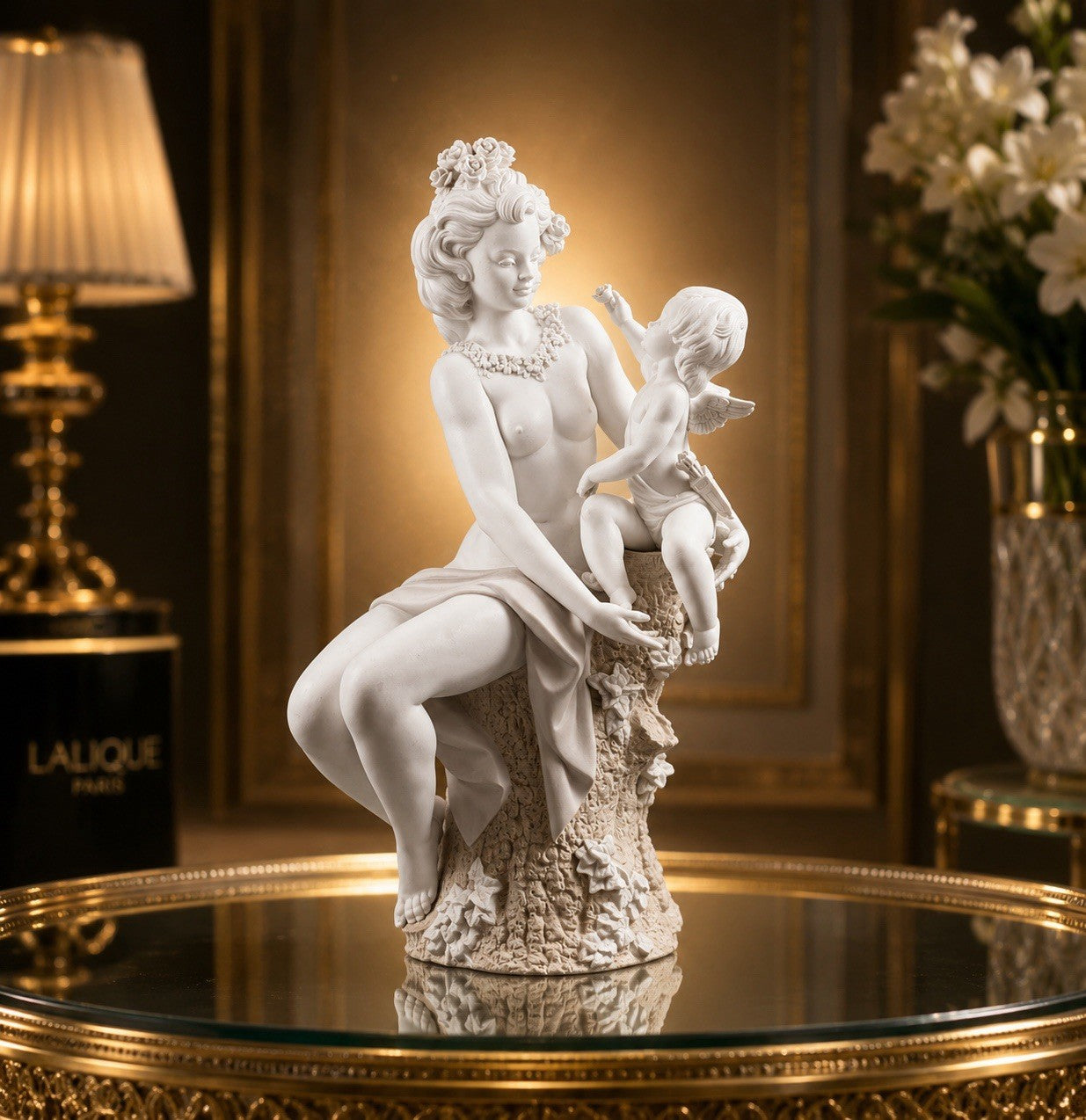
Mythological subjects carry symbolism that rewards a collector who knows what to look for. Venus, whether shown rising from the sea or accompanied by Cupid, signals themes of beauty and love; the composition often leans on classical contrapposto and flowing drapery that showcase Lladró's mastery of movement in porcelain. A figure group such as Venus & Cupid (#01011392) uses the relationship between the two figures to carry the narrative, and the modelling of that relationship is part of what collectors respond to.
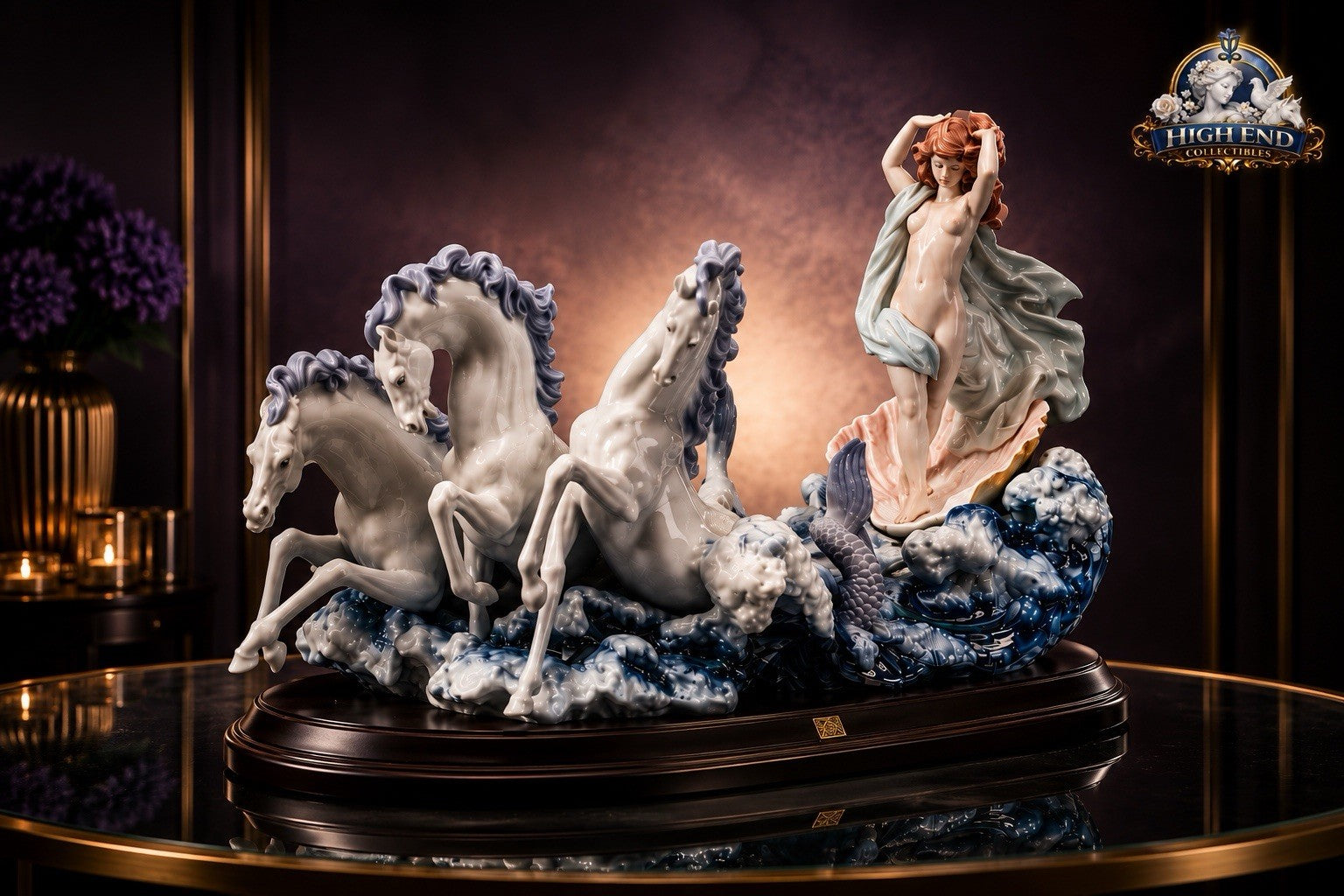
A monumental piece such as The Birth of Venus (#01001864), issued as an Elite Limited Edition of 1,000, is a case in point: its scale and classical subject make it a strong centerpiece.
Elite Limited Editions of 1,000 Pieces
Elite limited editions of 1,000 pieces represent a substantial, carefully managed run. Among the examples we offer is The Birth of Venus (#01001864), a High Porcelain piece issued as an Elite Limited Edition of 1,000. Its monumental scale and classical subject make it a strong centerpiece for a fine porcelain collection. You can view our elite limited editions collection to compare verified listings.
If you want to see how a 1,000-piece edition is presented in practice, look closely at the piece's documentation and the number recorded on it. The Birth of Venus sculpture shows how this range appears in a finished work.
Smaller Runs of 750 and Below
Smaller runs are where edition size becomes a more noticeable factor. A piece such as the Venus & Cupid (#01011392), issued as a Limited Edition of 750, sits in a tighter production range. Fewer examples were made, which is why collectors often pay closer attention to condition and provenance for pieces in this range.
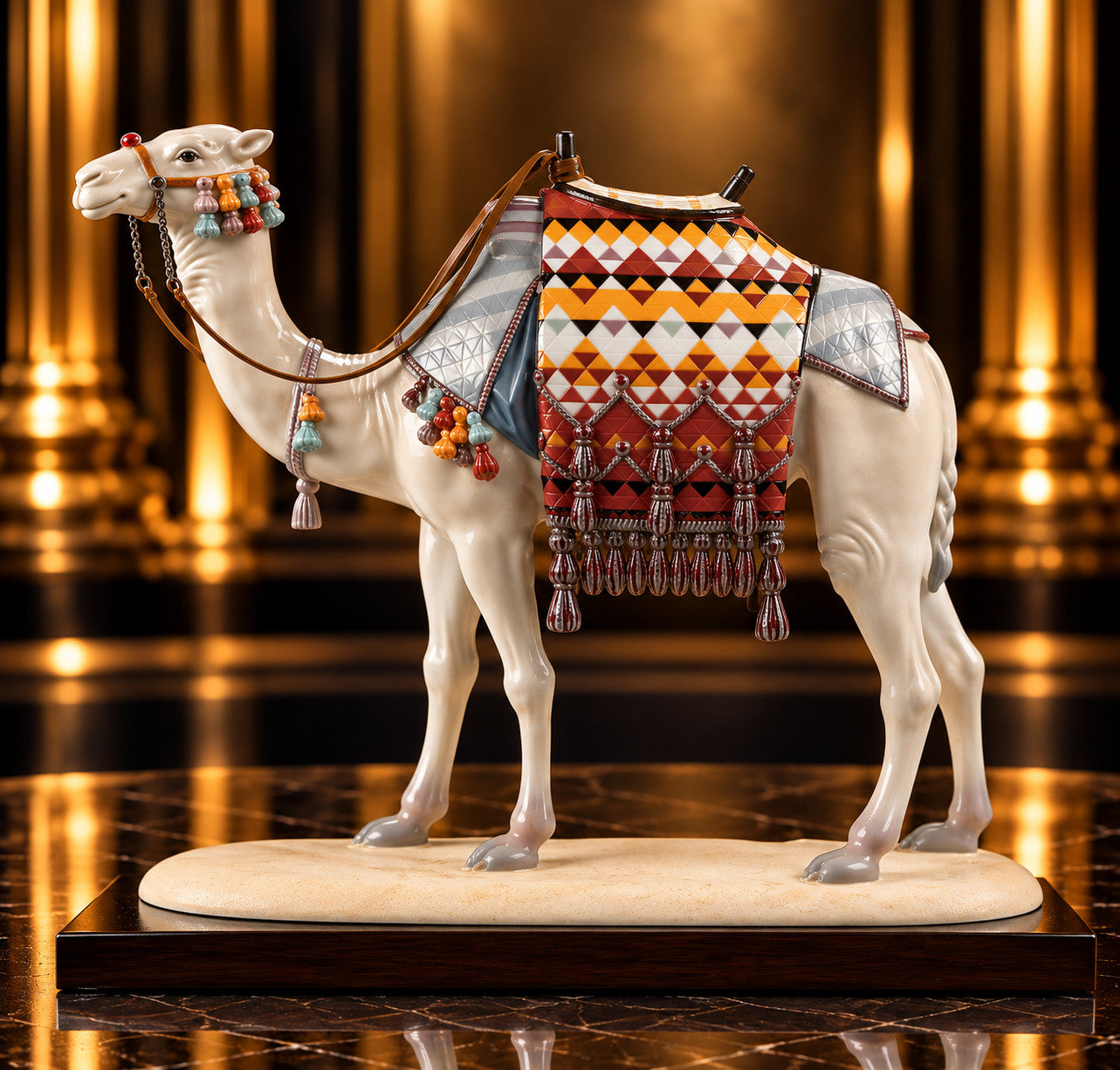
Smaller runs can also include sculptures at 500 pieces. The Camel (#01002008) is an example of a 500-piece limited edition that shows how a smaller run looks in a finished piece. Compare the Venus & Cupid limited edition and the Camel limited edition to see how these smaller runs differ in presentation.
Edition Size and Production Window Together
One of the most confusing points for buyers is how edition size interacts with the production window. A limited edition has a fixed cap, and production stops once that number is reached; an open edition has no fixed cap and may continue for as long as the manufacturer chooses.
Read the two facts side by side. The edition size tells you the ceiling; the production window tells you how that ceiling was approached.
Watch out: a dealer may describe a piece as 'limited' when it is simply retired. Confirm the edition fraction on the base and the official record before you treat a sculpture as a limited edition.
The table below summarises the edition sizes the article gives for the mythology pieces it mentions.
| Piece | Item number | Edition |
|---|---|---|
| The Birth of Venus | #01001864 | Elite Limited Edition of 1,000 |
| Venus & Cupid | #01011392 | Limited Edition of 750 |
| The Camel | #01002008 | Limited Edition of 500 |
Edition sizes of mythology sculptures in the article
Does a Smaller Edition Always Mean Greater Rarity?
It is tempting to assume that a smaller number automatically means a more valuable piece. The reality is more nuanced. A smaller edition may be harder to find, but rarity also depends on demand, condition, completeness and how many examples have survived in good shape.
Many collectors find that edition size is one factor among several. A 750-piece sculpture in poor condition may be less appealing than a 1,000-piece example in mint condition with its original box. The number is a starting point for research, not the final answer.
Identifying Numbered and Limited Markings on the Base
Careful inspection of the base is one of the most useful steps you can take, and it is where mythology sculptures reward a little specialized knowledge. Collectors commonly look for an item number, a sculptor's mark, a factory mark and any edition marking. Numbered markings identify the individual piece within its run, while limited markings indicate the edition it belongs to. These two kinds of marking are related but not the same, so read both carefully.
On Lladró porcelain, the base typically carries several distinct elements that should be read together rather than in isolation:
- The item or model number. This is the reference that ties the piece to its official record. It is the single most reliable anchor when you are comparing a sculpture against documentation or a dealer listing.
- The edition number. On a limited edition, this usually appears as a fraction-style marking, with the individual piece number set against the total edition size. A marking of this kind is what distinguishes a numbered limited edition from an open edition that carries no such figure.
- The sculptor's signature or mark. Where present, this connects the piece to the artist responsible for the modelling and is a detail collectors value.
- The factory or brand mark. This confirms the piece as Lladró production and, in some periods, can help place it within a broader era of output.
Where to Look on Mythology Pieces
Mythological subjects often present challenges that simpler figurines do not. A reclining goddess, a figure group such as Venus & Cupid, or a monumental composition like The Birth of Venus may have a base that is partly obscured by drapery, a plinth, or the sculpture's own mass.
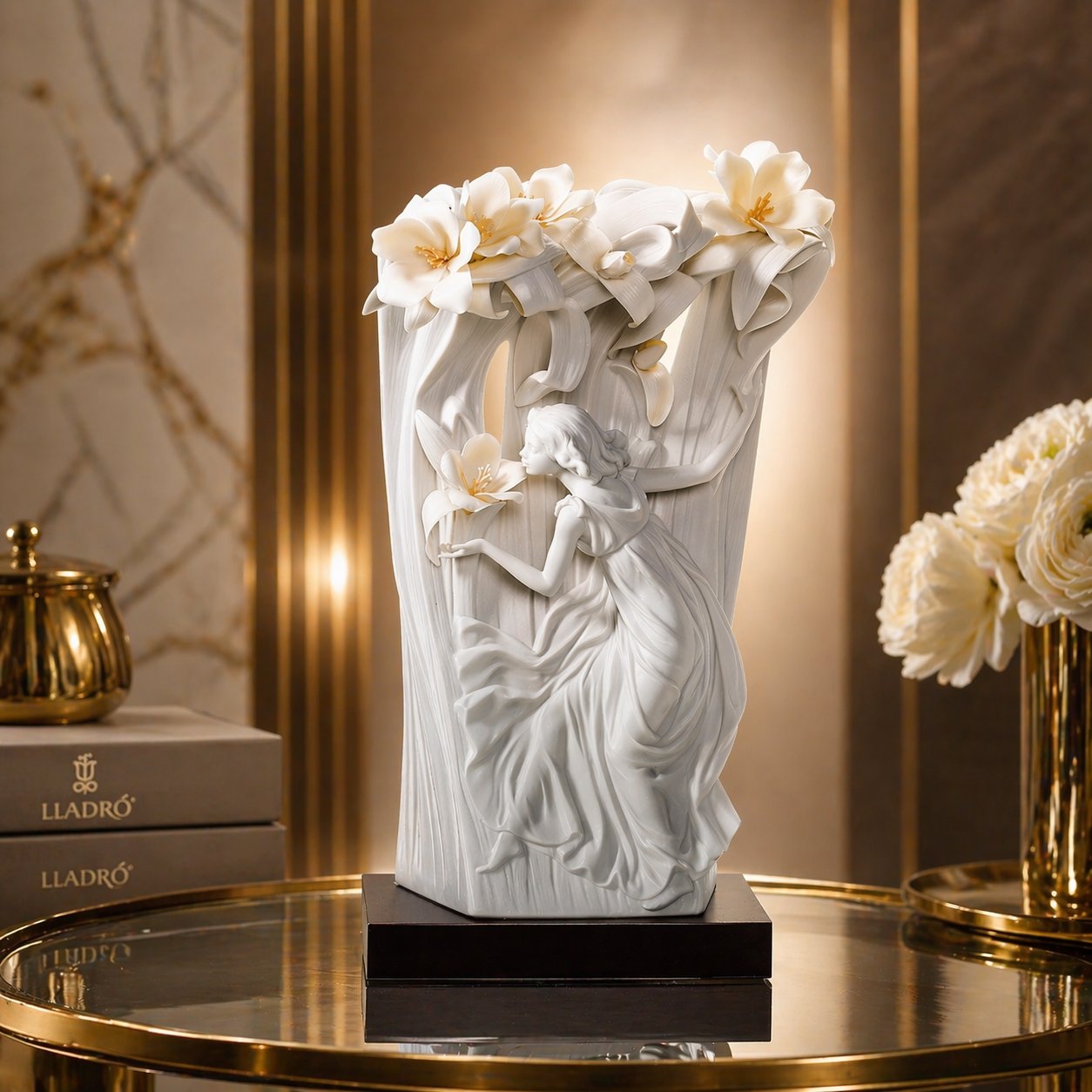
A common pattern is for the edition fraction to sit close to the item number, sometimes on the same plane of the base. On larger High Porcelain works, the base area may be more generous, which usually makes the markings easier to photograph and record. On smaller or more intricate pieces, the markings can be compressed into a tighter space.
Watch out: a faint or partly glazed-over marking is easy to misread, and a misread edition fraction can lead you to believe a piece is rarer than it is. Photograph the base before you rely on any reading, and compare it against verified records rather than trusting a single glance.
Reading the Marking in Context
A marking only becomes meaningful when it is matched to the piece's official record. The edition fraction tells you the size of the run; the item number tells you which sculpture it is; the sculptor's mark tells you who modelled it. Read all three together, and compare what you see with the documentation provided. If a marking is unclear, rely on verified records rather than guessing from appearance.
Verifying Edition Information Before You Buy
Edition information should always be confirmed before a purchase. Check the item number, the edition size, the sculptor and the retirement status against reliable records. When you are comparing several listings, a verified record gives you a far more dependable reference than memory or a single online description.
Ask these questions before you commit:
- Does the item number match the edition documentation?
- Is the edition size clearly stated and consistent across listings?
- Is the condition described accurately, including whether the original box is included?
- Can the seller confirm the details you have found?
You can also explore the Don Quixote collection and other established collections to see how verified listings are organized and presented.
Finding Your Next Mythology Piece at High End Collectibles
Edition sizes are most useful when you apply them to pieces you can examine closely. High End Collectibles curates Rare & Retired Lladró Masterpieces and presents listings with item number and sculptor details where they are verified. If you are building a mythology collection, start with the Limited Collections that suit your goals and compare the verified records side by side.
For discerning Lladró collectors, the right piece is the one whose documentation you trust and whose presence fits your collection. Browse our selection to find your next mythology sculpture.
Frequently Asked Questions
Does a retired Lladró sculpture count as a limited edition?
Not automatically. Retirement means Lladró has stopped producing a piece, while a limited edition is a defined run with a stated maximum number of pieces. A sculpture can be retired and open edition, or limited and still in production. Check the edition statement on the piece or its documentation to confirm which category it belongs to before assuming rarity.
Where can I find the edition information for a Lladró sculpture?
Start with the item number, which identifies the specific sculpture, and the sculptor and year of issue. Edition details are typically noted in the official Lladró catalogue records and in the documentation supplied with the piece. The Birth of Venus (#01001864) is listed as an Elite Limited Edition of 1,000, so you can compare that stated figure against the piece in hand.
Does a smaller Lladró edition size always mean greater rarity?
A smaller edition generally means fewer pieces were produced, but rarity also depends on how many examples survive in good condition, how many have been retained by collectors, and current demand. A small edition in poor condition may be less sought after than a larger edition in mint condition with original packaging. Treat edition size as one factor among several rather than a guarantee of value.
How can I verify the edition size of a Lladró mythology sculpture?
Confirm the item number on the base against the official record, check the stated edition size on the documentation, and ask the seller for the piece's condition and provenance details. Be cautious with listings that give no item number or edition figure. High End Collectibles lists item numbers and sculptor names where they are verified so buyers can cross-check before purchasing.


