
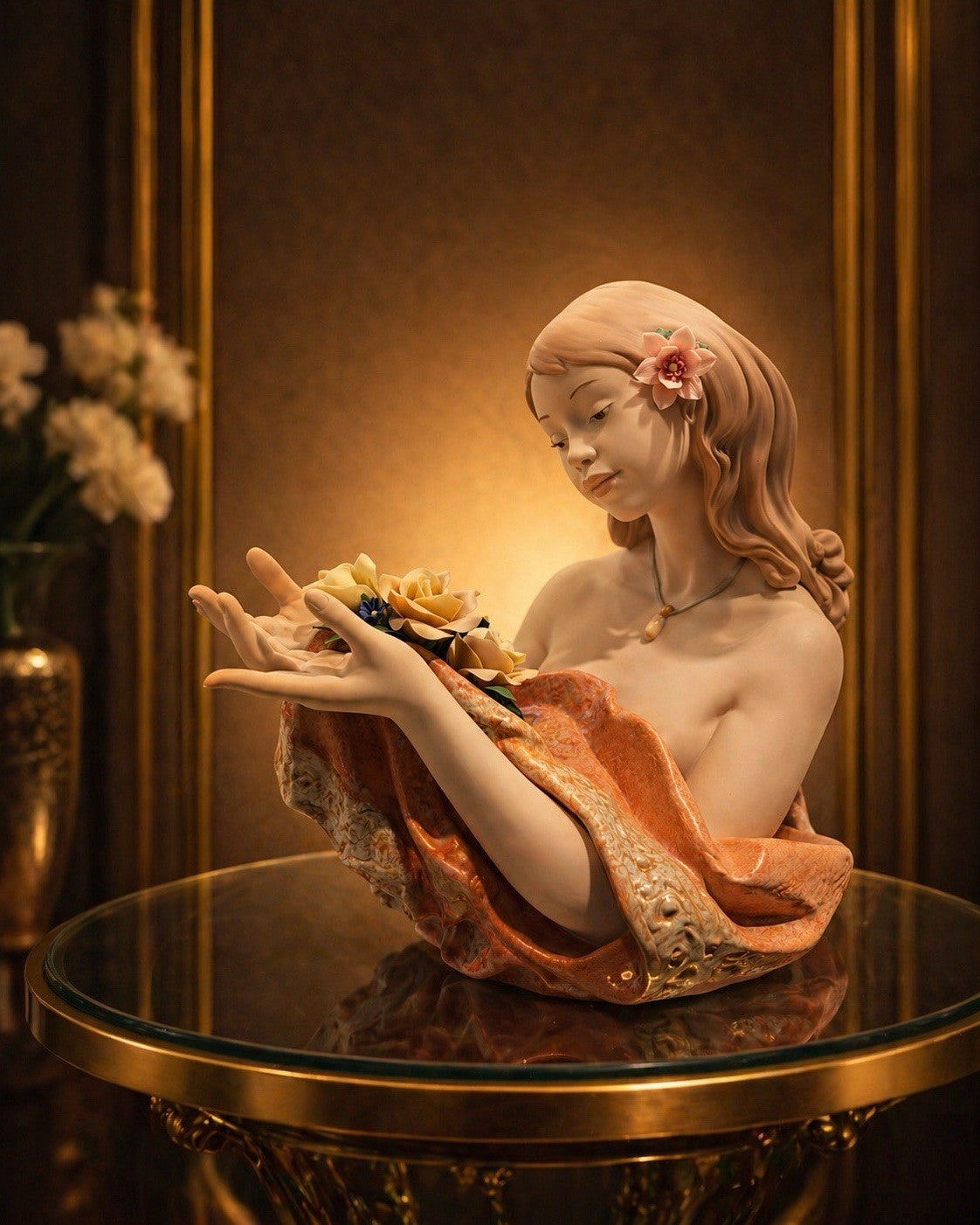

Valuing Retired Porcelain for Insurance: A Collector's Guide
Last Updated: November 1, 2026
How to Insure Rare and Retired Lladró Porcelain: A Collector's Guide
By Marta M. Diaz | Founder, High End Collectibles LLC
How to Insure Rare and Retired Lladró Porcelain: A Collector's Guide
By Marta M. Diaz | Founder, High End Collectibles LLC
For discerning collectors, a Lladró masterpiece is far more than a decorative object. It represents artistic vision, extraordinary craftsmanship, and often years of searching for a particular sculpture.
Whether your collection includes a cherished retired figurine, an elaborate limited edition, or a monumental High Porcelain creation, protecting these works requires thoughtful planning.
Unlike everyday household possessions, certain retired Lladró sculptures may be difficult to replace. Once production ends, collectors must rely on the secondary market, where availability, condition, provenance, and demand can vary considerably.
Understanding how insurance works for fine porcelain can help protect the financial value of a collection while preserving the legacy of the artistry it represents.
Quick Summary
Protecting valuable Lladró porcelain begins with accurate documentation, an understanding of replacement value, and insurance coverage appropriate for fragile collectibles.
- Document every masterpiece. Record the sculpture's official name, item number, dimensions, condition, photographs, and accompanying certificates or original packaging.
- Understand replacement value. The cost of acquiring a comparable sculpture may differ substantially from its original retail price or resale value.
- Consult a qualified appraiser when appropriate. Your insurer may require an appraisal for particularly valuable pieces.
- Verify accidental-breakage coverage. Standard homeowners policies and scheduled personal property policies differ in the protection they provide.
- Review your coverage periodically. Revisit valuations and policy terms as your collection and the market evolve.
The goal is not simply to insure a porcelain object. It is to understand what would be required to replace a treasured work of art.
Why Retired Lladró Porcelain Deserves Special Consideration
Lladró has created an extraordinary artistic legacy through sculptures celebrated for their expressive composition, intricate detailing, and porcelain craftsmanship.
Some sculptures remain in production, while others have been retired. Limited editions may have defined production quantities, and certain High Porcelain works are distinguished by particularly elaborate sculptural compositions.
These distinctions matter when considering insurance.
A current-production sculpture may be available through established retail channels. A retired masterpiece, however, may require an extended search to locate a comparable example.
For an especially intricate or limited-edition work, availability can be even more restricted.
Retirement does not automatically establish rarity or increased value. Nevertheless, limited availability can complicate replacement and should be considered when evaluating insurance needs.
Understanding Insurance Replacement Value
One of the most important distinctions for collectors is the difference between replacement value and resale value.
Replacement value
Replacement value generally concerns the cost of obtaining a comparable item under the valuation approach specified by the appraisal or insurance policy.
For a retired Lladró sculpture, an appraiser may consider relevant dealer offerings, documented sales, condition, availability, and other market evidence.
The precise valuation definition matters. Insurance policies may distinguish replacement cost, agreed value, stated value, and actual cash value, each with different implications.
Resale value
Resale value concerns what a collector might receive when selling a sculpture under particular market conditions.
A dealer's purchase offer, auction result, and retail asking price may all differ because they reflect different selling circumstances.
Why the distinction matters
Imagine a collector owns a retired Lladró sculpture that is seldom offered for sale.
The price the collector could obtain through a quick sale might be considerably different from the cost of locating and purchasing a comparable example from a specialist dealer.
Neither figure should automatically be assumed to represent the amount an insurer would pay.
Collectors should ask their insurer which valuation basis applies and how a covered loss would be settled.
What a Professional Porcelain Appraisal Should Include
For particularly valuable Lladró masterpieces, a qualified appraisal can provide important documentation.
An appraisal prepared for insurance purposes should identify the sculpture, describe its condition, explain the valuation approach, and provide a supported value conclusion.
Depending on the assignment, useful information may include:
- Official sculpture name and known item number
- Manufacturer and sculptor, when verified
- Dimensions, finish, and distinguishing features
- Photographs of the sculpture and its base
- Relevant markings and inscriptions
- Edition information, when applicable
- Condition, including previous repairs or restoration
- Relevant market evidence and comparable examples
- Valuation date, intended use, and appraiser credentials
Not every insurer requires the same appraisal format.
Before commissioning a report, ask your insurance provider what documentation it requires and whether an existing appraisal remains acceptable.
Choosing a Qualified Appraiser
Fine porcelain requires specialized knowledge.
When seeking an appraisal, consider professionals experienced in decorative arts, ceramics, fine porcelain, or collectible sculpture.
Experience with Lladró or comparable Spanish porcelain may be especially useful.
Ask prospective appraisers about their qualifications, relevant experience, valuation methodology, and professional standards.
A well-supported appraisal should explain how its value conclusion was reached rather than simply assign an unsupported figure.
Collectors may also wish to inquire about recognized professional appraisal organizations and applicable appraisal standards.
High End Collectibles specializes in curated Lladró sales and collector education; professional insurance appraisals should be obtained from appropriately qualified independent specialists.
How Condition Influences the Value of Lladró Porcelain
Condition is a major consideration in the collectible porcelain market.
Lladró sculptures often incorporate delicate elements, including flowers, fingertips, lacework, ornaments, and intricate decorative details.
Even minor damage can affect collector desirability, although the financial impact varies by sculpture and market.
Mint or undamaged condition
An undamaged sculpture with its original finish and no repairs may be especially desirable.
Original packaging, certificates, and documentation can strengthen its presentation and collector appeal, particularly for certain limited editions.
However, a missing box does not automatically mean a sculpture is damaged or substantially less valuable.
Minor imperfections
Small chips, surface marks, or other imperfections should be documented accurately.
Their significance depends on visibility, location, extent, and the sculpture's characteristics.
Restored porcelain
Professional restoration may improve a sculpture's appearance, but it does not necessarily return its market value to that of an unrestored example.
Restoration should be disclosed when obtaining an appraisal or discussing coverage with an insurer.
Why documentation matters
Photographs taken before a loss can help establish the sculpture's condition.
Capture the front, back, sides, base, identifying marks, and delicate details.
Retain dated images whenever possible.
Lladró Authenticity, Markings, and Documentation
Accurate identification is essential when documenting a valuable sculpture.
Lladró has used different markings during its history, and identifying characteristics can vary by production period and model.
Collectors should not assume that every authentic Lladró sculpture carries an identical backstamp, sculptor inscription, or visible item number.
When documenting a piece, photograph all markings and record any available supporting information.
For limited editions, retain edition certificates and documentation where supplied.
Original receipts, dealer records, and provenance information can also be useful.
If identification is uncertain, seek assistance from a knowledgeable specialist rather than relying on a single mark or online comparison.
Does Homeowners Insurance Cover Valuable Lladró Figurines?
Some homeowners insurance policies provide protection for personal property, including decorative objects and collectibles.
However, coverage varies significantly.
The existence of personal property coverage does not guarantee that every type of loss involving porcelain is insured.
For example, accidental breakage may be treated differently from theft, fire, or other covered events.
Policies can also contain exclusions, deductibles, valuation provisions, and limits that affect claim payments.
Collectors should review their policy with their insurer or insurance agent.
Questions worth asking
- Are my Lladró sculptures covered under my existing homeowners policy?
- Is accidental breakage covered?
- Are there any exclusions affecting fragile collectibles?
- Does the policy settle covered losses using replacement cost, actual cash value, or another method?
- Would individually scheduling valuable sculptures provide more suitable protection?
- Is an appraisal required?
- What deductibles and coverage limits apply?
- Are sculptures protected while being transported or moved?
These questions are particularly important for collectors with valuable High Porcelain works or substantial collections.
Scheduled Personal Property and Valuable Collections
Some insurers offer scheduled personal property endorsements or specialized coverage for valuable objects.
These arrangements may allow individual sculptures to be identified and insured under specified terms.
Depending on the policy, scheduling may provide different valuation provisions, deductibles, or covered causes of loss.
However, scheduling an item does not automatically guarantee accidental-breakage coverage or payment of its full appraised value.
The written policy determines what is covered.
Collectors should request clear explanations of exclusions, settlement conditions, and any special requirements for fragile porcelain.
For significant collections, specialized fine-art or collectibles insurance may also be worth discussing with a licensed insurance professional.
Insuring Limited Editions and High Porcelain Masterpieces
Certain Lladró creations deserve particularly careful documentation because of their complexity, size, limited production, or replacement challenges.
High Porcelain sculptures may feature elaborate arrangements, delicate decorative elements, and extensive craftsmanship.
Limited editions introduce additional considerations, including edition numbers, accompanying certificates, and availability of comparable examples.
For these works, collectors should maintain detailed records and discuss appropriate valuation and coverage with qualified professionals.
A large or complex sculpture may also require special handling during transportation, installation, or relocation.
Insurance protection during these activities should be confirmed in advance.
Building a Lladró Collection Inventory
An organized inventory is one of the most practical ways to protect a collection.
Create a separate record for each sculpture, including:
- Official Lladró name and item number, when known
- Sculptor and edition information, when verified
- Dimensions and finish
- Purchase date and purchase price
- Current condition
- Photographs of the sculpture and identifying marks
- Certificates, receipts, and other documentation
- Appraisal details, if applicable
- Insurance policy or scheduled-item reference, if applicable
Store copies securely in more than one location.
A digital backup can be particularly valuable if physical documents are damaged or lost.
For larger collections, a spreadsheet or dedicated collection-management system can make periodic reviews easier.
What to Do if a Lladró Sculpture Is Damaged
Discovering damage to a treasured sculpture can be distressing, particularly when it involves a retired or limited-edition work.
If a loss occurs, first take reasonable steps to prevent further damage and preserve safety.
Photograph the condition of the sculpture and surrounding circumstances when it is safe to do so.
Retain fragments and relevant packaging if practical.
Notify your insurer promptly and follow its instructions regarding inspection, repair estimates, documentation, and claim submission.
Avoid authorizing restoration or disposing of damaged components before understanding the insurer's requirements, unless immediate action is necessary for safety or to prevent further loss.
If damage occurs during shipping, promptly review the carrier's claims process and any applicable shipping insurance.
How Often Should Collectors Review Their Insurance?
Collection values and insurance needs can change over time.
A practical starting point is to review your inventory and coverage annually, and ask your insurer or appraiser how frequently formal valuations should be updated.
Some collectors use a three-to-five-year appraisal review cycle, but the appropriate interval depends on the insurer's requirements and the nature of the collection.
Consider an earlier review after significant acquisitions, sales, restoration, or material changes in market conditions.
The objective is to keep records and coverage aligned with the collection you actually own.
Frequently Asked Questions
Does every retired Lladró sculpture need a professional appraisal?
Not necessarily. Requirements depend on the insurer, policy, value, and circumstances. A qualified appraisal may be particularly useful for valuable or difficult-to-replace sculptures.
Is a retired Lladró automatically more valuable than a current-production piece?
No. Retirement means production has ended, but value also depends on demand, condition, availability, artistic significance, and other market factors.
Does an original box increase a Lladró sculpture's value?
Original packaging and documentation can improve collector appeal and may influence value. Their importance varies by sculpture and buyer.
Does insurance automatically cover accidental breakage?
No. Accidental-breakage coverage depends on the policy. Collectors should confirm whether it is included, excluded, or available through additional coverage.
Can a professionally restored Lladró sculpture be insured?
Potentially, yes. Eligibility, valuation, and coverage depend on the insurer and policy. Existing restoration should be documented accurately.
How do I determine the replacement value of a rare Lladró sculpture?
A qualified appraiser may evaluate relevant market evidence, condition, comparable examples, and availability using an appropriate valuation method. Confirm with your insurer which valuation basis it requires.
Should I insure a Lladró masterpiece for its original retail price?
Not automatically. Historical retail price may provide context, but it may not reflect the valuation basis or current replacement cost required by your policy.
Preserving the Legacy of Exceptional Porcelain
A carefully curated Lladró collection represents more than its financial value.
Each sculpture carries the artistic vision of its creator, the craftsmanship of skilled artisans, and a personal connection to the collector who chose it.
Thoughtful documentation, appropriate insurance, and periodic valuation reviews help preserve that legacy.
At High End Collectibles, we celebrate the extraordinary artistry of Lladró through a curated selection of rare, retired, limited-edition, and High Porcelain masterpieces.
Whether you are expanding an established collection or discovering your first exceptional sculpture, we invite you to explore the beauty and craftsmanship of these remarkable works.
Explore Our Lladró Collection
https://highendcollectibles.com
For Discerning Lladró Collectors.
Editorial note: This article provides general collector education and does not constitute insurance, legal, or professional appraisal advice. Coverage, valuation, and claim outcomes depend on individual policy terms and circumstances. Consult a licensed insurance professional and qualified appraiser for guidance specific to your collection.


