

Five Porcelain Figurine Display Ideas for Collectors
Last Updated: November 2, 2026
Quick Summary
The top porcelain figurine display ideas for collectors are a glass-fronted cabinet with adjustable shelves, wall-mounted or custom shelving, scale-and-story shelf arrangement, sealed shadow boxes and cases, and cool LED lighting angled across pieces. A glass-front cabinet is the single best home for valuable figurines because it blocks dust and buffers temperature swings.
- Choose LED lighting over halogen and angle lights across pieces, not straight at them, to cut glare.
- Anchor wall shelves into studs and rate brackets at least double the combined shelf and collection weight.
- Leave roughly a third of each shelf empty so porcelain has air and avoids knocks when dusting.
- Keep the lowest wall shelf above hip height to clear vacuum cleaners, pets, and passing traffic.
- Dust with a soft brush or microfibre cloth rather than a feather duster, which can snag lace and gold accents.
Table of Contents
- Why Display Choices Matter for Porcelain Figurines
- 1. A Porcelain Figurine Display Cabinet With Glass Fronts
- 2. Wall-Mounted Shelves and Custom Shelving for Limited Space
- 3. How to Arrange Collectibles on Shelves by Scale and Story
- 4. Dust-Free Display Ideas for Figurines: Shadow Boxes and Sealed Cases
- 5. Lighting for Collectible Displays Without Glare or Heat Damage
- Comparing Display Options by Space, Cost and Collection Size
- Choosing the Right Display for Your Next Lladró Acquisition
- Frequently Asked Questions
Why Display Choices Matter for Porcelain Figurines
Porcelain figurine display is the practice of placing glazed porcelain sculptures where light, dust, and handling risk are controlled.
Before you spend on cabinets and lighting, confirm what you own. Our guide on how to spot fake Lladró walks through the marks and glazes that separate authentic pieces from reproductions.
Collectors who wonder about the community behind these pieces can also read what Lladró Collector Society membership offered members.
1. A Porcelain Figurine Display Cabinet With Glass Fronts
A glass-fronted cabinet is the single best home for valuable figurines: it blocks dust, buffers temperature swings, and lets you see the pieces without touching them. For most collectors with more than a handful of sculptures, this is the answer.
What to Look for in a Glass Cabinet
- Adjustable shelves. A 13-inch sculpture and a 21-inch vase need different clearance. Fixed shelves waste space and force awkward placement.
- Glass on more than one side. Side glass lets light in and lets you see the back of multi-figure compositions.
- A lock. Figurines are fragile and, in some homes, tempting to small hands.
- Solid back panel. It stops light and dust coming through the wall side.
- Weight capacity per shelf. Porcelain is heavier than it looks; a large High Porcelain piece can strain thin glass.
Watch out: cabinets placed against an outside wall or beside a radiator expose porcelain to temperature swings that stress glaze over time. Keep a small gap from the wall.
2. Wall-Mounted Shelves and Custom Shelving for Limited Space
Wall-mounted shelves and custom shelving are the best answer when floor space is gone but your collection keeps growing. They put small pieces at eye level, free up the floor, and let you build the display around your tallest sculpture rather than around a cabinet manufacturer's standard dimensions.
Staggered Heights and a Deliberate Focal Point
Hang shelves at two or three different heights rather than one long run. Staggered heights create depth, give small figures their own stage, and stop a row of similar pieces from reading as a shop shelf.
Reserve the centre of your main shelf for one larger piece as the focal point, then arrange smaller figures around it in descending scale.
Practical Rules for Wall Displays
- Anchor into studs, not plasterboard. A shelf loaded with porcelain is heavy; drywall anchors alone are a tipping risk. Use a stud finder and toggle bolts only where a stud is unavailable.
- Rate the brackets well above the load. Most practitioners allow a safety margin of at least double the combined shelf and collection weight.
- Keep the lowest shelf above hip height. This clears vacuum cleaners, pets, and accidental contact from passing traffic.
- Add a lip or museum putty. A small front lip or removable museum putty under bases stops pieces sliding on high-traffic walls or in homes with vibration from doors and stairs.
- Leave a gap from outside walls. Exterior walls swing in temperature and humidity more than interior walls, which stresses glaze over time.
Custom Shelving for Large or Odd-Sized Pieces
Custom shelving built to your collection's dimensions beats off-the-shelf units when you own several larger pieces or a mix of heights. Measure your tallest sculpture, add clearance for lifting it on and off the shelf, and build around that number. A 21-inch vase needs more than 21 inches of vertical space; the extra clearance is what lets you handle it safely.
For collectors in apartments or rooms with limited floor space, wall shelving also makes dust control easier to manage because you can reach every piece for routine cleaning without moving furniture.
3. How to Arrange Collectibles on Shelves by Scale and Story
How to arrange collectibles on shelves comes down to two decisions: scale and story. Group by size first so no small figure disappears beside a large one, then group by theme or provenance so the shelf reads as a curated collection rather than a storage unit.
A Repeatable Arrangement Method
Try this sequence on each shelf or cabinet bay:
- Place the anchor piece slightly off-centre. The largest or most important figure sets the visual weight; off-centre placement keeps the arrangement from looking static.
- Build outward with medium figures. Keep consistent gaps between pieces so each one has its own silhouette.
- Put mini figures at the front edges. Small pieces read best where they are not crowded by taller neighbours.
- Group by story, not just by size. A Japanese-themed set, a single sculptor's series, or pieces acquired on the same trip can share a shelf and give the collection a narrative.
- Leave roughly a third of each shelf empty. Porcelain needs air around it, both visually and to avoid knocks when you dust.
Organizing by Scale, Provenance, or Collection Story
Scale grouping prevents the common problem of a miniature disappearing beside a large centrepiece. Provenance grouping, by maker, series, era, or acquisition story, gives the display meaning and makes it easier to explain to visitors. A practical compromise is to group by story within a scale band: large pieces together, medium pieces together, and miniatures together, with each band telling its own story.
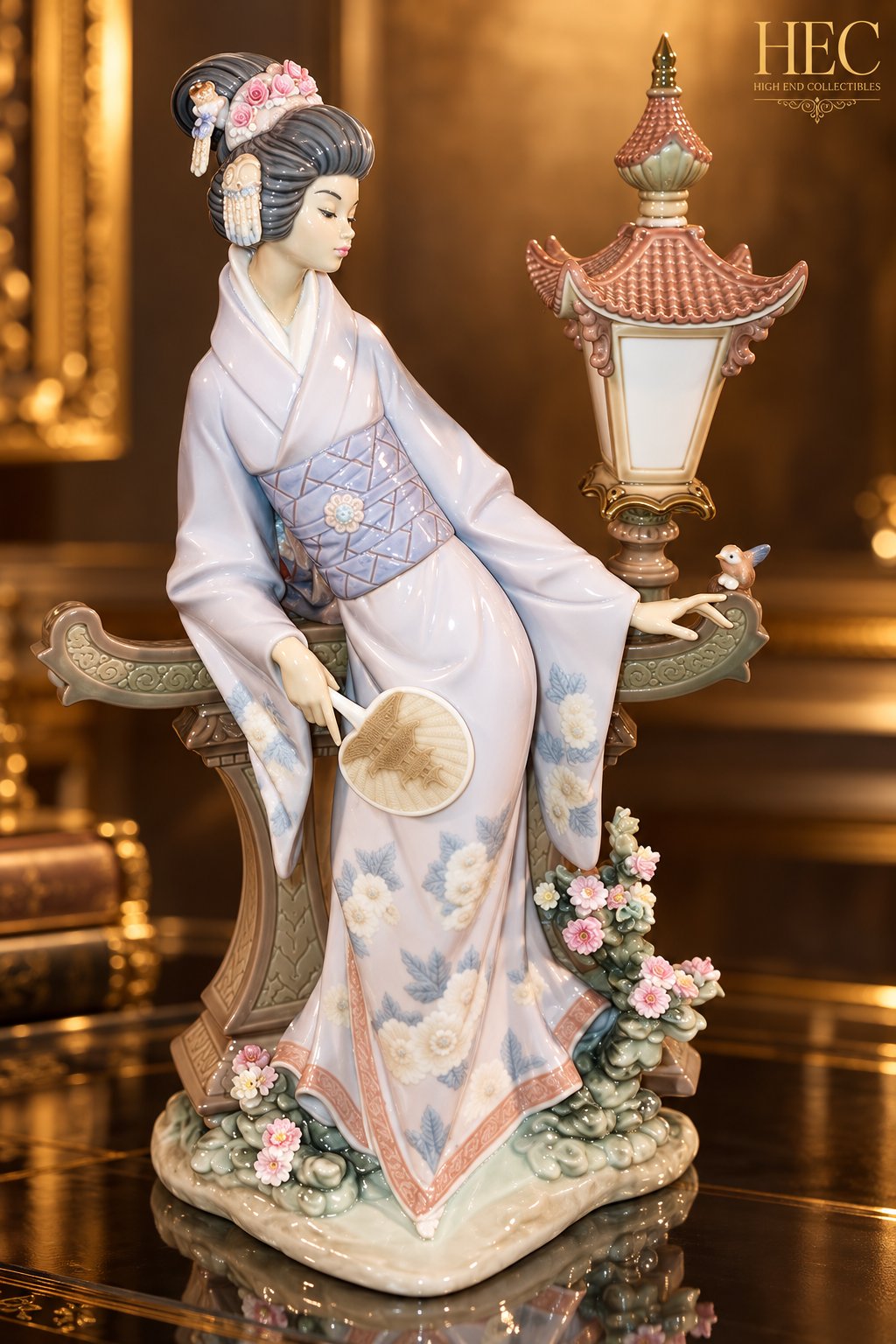
LLADRO SPRINGTIME IN JAPAN • W/ORIGINAL DISPLAY • LAST RETAIL $2,550 →
Porcelain-Specific Handling and Maintenance
Arrangement is also a handling decision. Porcelain chips at the rim and base, so build the display so you never have to reach over one piece to get to another. Keep the most fragile or valuable pieces at the front of a shelf or on a pull-out tray. Dust with a soft brush or microfibre cloth rather than a feather duster, which can snag lace, flowers, and gold accents. Lift pieces by the base, never by an outstretched arm or a delicate detail.
If you are arranging a mixed collection, browse retired Lladró pieces to see how series and retirement dates can inform story-based grouping.
4. Dust-Free Display Ideas for Figurines: Shadow Boxes and Sealed Cases
Dust-free display ideas for figurines work best when the case closes completely. A shadow box or sealed case keeps dust off intricate detail, which matters most on pieces with fine lace, flowers, or gold accents.
Shadow boxes suit single figures and small groupings. Mount the piece on its base, add a plain background, and seal the front glass.
A minimalist frame around a shallow box can turn a single figurine into wall art. This works well for pieces with a strong silhouette.
5. Lighting for Collectible Displays Without Glare or Heat Damage
Lighting for collectible displays should be cool, indirect, and adjustable. Heat and UV are the two things that damage glazed porcelain, so choose LED over halogen and keep lights off the surface.
- Choose LED lighting where possible.
- Angle lights across the piece, not straight at it, to cut glare on glaze.
- Fit a dimmer so evening light stays soft.
- Keep lights a comfortable distance from the porcelain.
- Rotate pieces away from any window that gets direct afternoon sun.
Glare hides detail. If you can see a bright reflection instead of the sculpture's face, move the light.
Comparing Display Options by Space, Cost and Collection Size
| Display option | Space needed | Relative cost | Best for | Main trade-off |
|---|---|---|---|---|
| Glass-front cabinet | Floor space | Higher | Collections of 5+ pieces | Takes up room |
| Wall-mounted shelves | Wall only | Moderate | Limited floor space | Dust exposure |
| Custom shelving | Wall or alcove | Higher | Large or odd-sized pieces | Installation work |
| Shadow box | Wall only | Lower | Single figures | One piece per box |
| Sealed case | Surface or floor | Moderate | High-detail pieces | Less accessible |
If you are weighing what to display next, browsing retired Lladró pieces shows why retired figurines are often the ones collectors protect most carefully.
Choosing the Right Display for Your Next Lladró Acquisition
Match the display to the piece before you buy it, not after. A 21-inch vase needs height and a stable base; a multi-figure composition needs width and side glass. When you are ready to plan a centrepiece, browse all Lladró masterpieces and the elite limited editions that deserve the best-lit spot in the room.
Frequently Asked Questions
What is the best way to display porcelain figurines?
A glass-fronted cabinet is the safest default for most collectors. It keeps dust off glazed surfaces, limits accidental knocks, and lets you control light. Position the cabinet away from direct sun and radiators, and place heavier or larger pieces on lower shelves. For a single prized sculpture, a shadow box or sealed case works just as well. Whichever route you take, use the original display base where one is included, as with Lladró's Daydreaming by the Pond, which ships with its base and certificate.
How do you display porcelain figurines without making a room look cluttered?
Limit each shelf to three to five pieces and leave visible gaps between them. Group by a single theme, such as a Japanese-inspired series, rather than mixing every style you own. Staggered heights help: raise a smaller piece on a slim riser so it sits beside, not behind, a taller sculpture. Rotate part of the collection into storage every few months. A porcelain figurine display that changes seasonally reads as curated rather than crowded, and it protects delicate pieces from handling.
Are glass cabinets good for displaying porcelain figurines?
Yes, with two caveats. Glass keeps dust off and lets you see pieces from several angles, which suits glazed Lladró finishes. Choose a cabinet with a solid back where possible. Also check shelf depth against your widest piece: Lladró's Lion Dance measures 20.75 inches wide, so a standard 12-inch shelf will not hold it. Measure before you buy, and anchor tall cabinets to the wall.
How can you protect porcelain figurines from dust and damage?
Enclosed display is the first line of defence. Sealed cases and glass doors cut dust dramatically, and a soft brush or microfibre cloth handles what settles. Keep pieces off high-traffic surfaces where sleeves and bags swing past. Avoid direct sunlight, which dulls glazes and bleaches colour, and keep displays away from heat sources. When moving a sculpture, lift it by the base, never by an arm, parasol or extended element. Retain original boxes and paperwork where you have them.
What lighting is safest for displaying porcelain figurines?
LED is the safest choice. It runs cool, so it will not dry or crack porcelain the way halogen and incandescent bulbs can, and it emits minimal UV. Aim light from above and slightly in front rather than straight at the glaze, which causes glare and hides detail. Use a dimmer where possible, keep cables secured behind the cabinet, and add a diffuser to strip lights so highlights fall softly across the piece instead of creating hot spots.
Your collection deserves a display that protects it as well as it shows it off. At HIGH END COLLECTIBLES, we curate rare, retired, and limited edition Lladró masterpieces organized by rarity, artistic heritage, and collector demand, with free shipping on select items. Get started with HIGH END COLLECTIBLES and give your next acquisition the setting it was made for.


