

How to Spot Fake Lladró: 7-Step Authentication Guide
Table of Contents
- How to Spot Fake Lladró: A Step-by-Step Authentication Workflow
- Authentic Lladró Marks and Backstamps: What the Base Should Show
- How to Identify Lladró Figurines: Finish, Glaze, and Craftsmanship
- A Dated Guide to Changes in Lladró Marks and Numbering
- Counterfeit Red Flags and False Positives
- Lladró Condition and Damage Assessment: What Affects Authenticity
- Lladró Figurine Value and Appraisal: When to Escalate
- Frequently Asked Questions
Last Updated: October 7, 2026
How to Spot Fake Lladró: A Step-by-Step Authentication Workflow
Learning how to spot fake Lladró comes down to one habit: check the base before you fall in love with the sculpture. Lladró is a Spanish porcelain house based in Valencia, and its pieces have been copied for decades. The copies rarely survive close inspection of the underside. This guide walks through a seven-step workflow, from the backstamp to the paintwork.
Here is the short version, then the detail:
- Turn the piece over and read the base first
- Check the blue stamp, bellflower mark, and logo shape
- Find the country-of-origin wording
- Look for etched or printed numbers
- Study the glaze and finish
- Inspect paintwork and sculpting up close
- Weigh the packaging and provenance story
Most fakes fail at step two or three.
Authentic Lladró Marks and Backstamps: What the Base Should Show
Authentic Lladró marks and backstamps sit on the underside of the piece and normally combine a blue stamp, a maker's mark, and origin wording. The base is the single most reliable place to judge a piece, because it is the hardest part to fake cleanly.
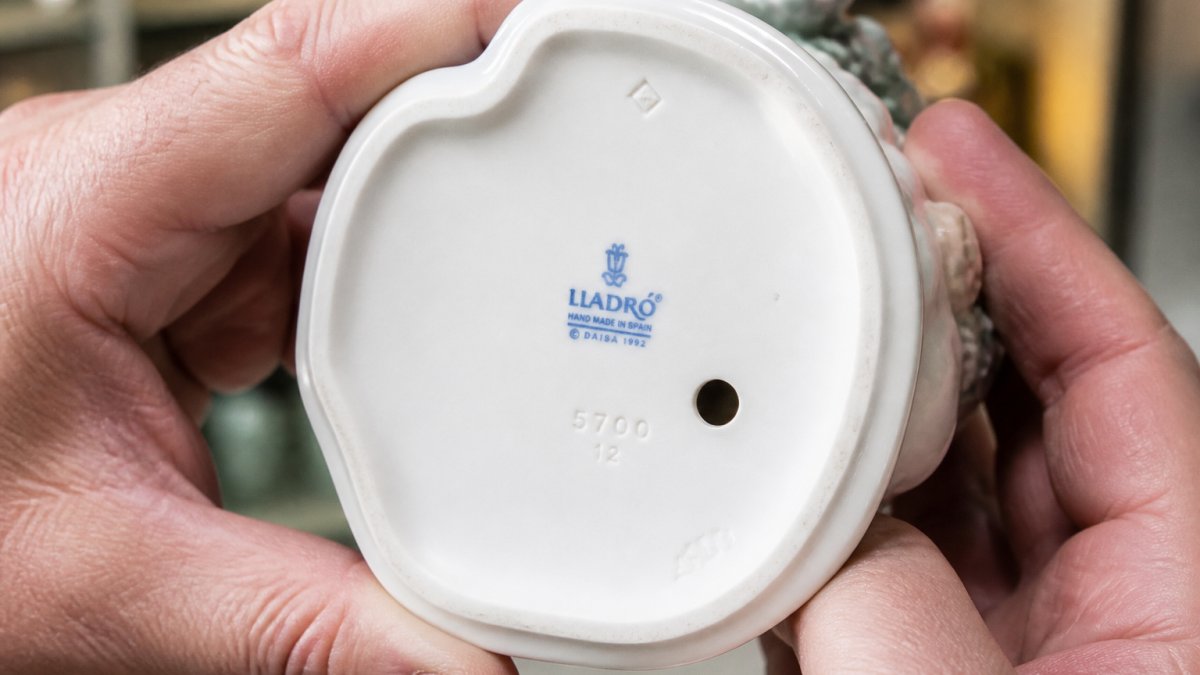
Start with the surface itself. A genuine base has a smooth, glass-like finish. Feel it with your thumb. Rough patches, gritty spots, or a chalky texture usually mean the piece was cast outside the original factory.
The Blue Stamp, Bellflower Mark, and Logo Variations
The blue stamp is the factory mark applied under the glaze. It should look crisp, even, and fully transferred. A blurry or patchy stamp is a warning sign.
The bellflower mark appears on certain production periods and is one of the most copied details. On a genuine piece, the bellflower is drawn with fine, deliberate lines. On a fake, it often looks heavy or smudged.
Logo shape changed over the decades. Early marks differ from later ones in lettering, spacing, and the way the factory name sits inside the design. Compare any logo against a dated reference before you trust it.
Country of Origin, Serial Numbers, and Reference Numbers
Country-of-origin wording tells you where and roughly when a piece was made. Early pieces carry different wording than later ones, and "Made in Spain" appears in specific formats depending on the era.
Serial numbers, reference numbers, and etched numbers also matter. Genuine pieces often carry a hand-etched or printed number that ties the sculpture to a model reference. The numbers should be sharp and consistent, not scratched in by hand after the fact.
How to Identify Lladró Figurines: Finish, Glaze, and Craftsmanship
To identify Lladró figurines, look past the subject and study how the piece was made. Lladró built its reputation on soft, flowing forms and a glaze that feels like glass. Copies tend to look flat by comparison.
Hold the piece near a window. The glaze should reflect light evenly across the whole surface. Dull patches, bubbles, or a plastic sheen point to a lower-grade copy.
Weight matters too. Genuine porcelain has a dense, solid feel in the hand. A surprisingly light figurine is often a sign of a cheap cast.
Inspecting Paintwork, Sculpting, and Mold Detail
Hand-painted details are where the real workshop shows through. Look at faces, hands, and flowers. Genuine paintwork has soft transitions between colors. Fakes often show hard edges where one color stops and another begins.
Sculpting and mold detail should look natural. Fingers, fabric folds, and hair should have depth and movement. If the surface looks melted or the features look soft, the piece probably came from a worn mold.
Fine detail is the tell. Zoom in on a photo if you are buying online. Real craftsmanship survives magnification.
A Dated Guide to Changes in Lladró Marks and Numbering
Mark variation across production periods is the angle most guides skip, and it is where experienced collectors earn their edge. Lladró marks, numbering systems, and origin wording shifted over the decades. A piece with the wrong mark for its stated era is a red flag, even if everything else looks right.
Build yourself a dated reference. The goal is not to memorize every stamp but to learn which signals travel together.
| Era Signal | What to Check | Why It Matters |
|---|---|---|
| Early production | Simpler logo, different origin wording, hand-etched numbers | Later marks on an "early" piece signal a fake |
| Mid-century output | Bellflower mark appears in specific formats; blue stamp quality varies | Copied heavily, so compare line quality and transfer sharpness |
| Later production | Updated logo shape and numbering style; printed rather than etched numbers | Mismatched mark and number is a warning |
| Contemporary pieces | Cleaner transfers, consistent spacing, branded packaging | Counterfeits often reuse older-looking marks on newer bodies |
The rule is simple. The mark, the numbering, and the origin wording should all agree on roughly the same production period. When they disagree, walk away.
A common pattern in counterfeits is mixing eras: a bellflower mark paired with a modern logo shape, or "Made in Spain" wording that does not match the stamp style. Most practitioners find that era mismatches are more reliable than any single mark on its own.
Counterfeit Red Flags and False Positives
Counterfeit red flags cluster in the same places every time, which makes them easy to screen for once you know the pattern. Watch for:
- A base with no mark at all, or a mark that looks painted on rather than fired in
- Numbers that look scratched in with a tool after firing
- A glaze that feels chalky or looks uneven under light
- Paintwork with hard color edges and no blending
- A price that sits far below what the piece should command
- A seller who cannot describe where the piece came from
False positives matter just as much. An unmarked piece is not automatically a fake. Some genuine pieces lose their mark to wear, repair, or an imperfect factory transfer. Age and damage can also dull a stamp.
This is where a lookalike fools careful buyers. A well-made reproduction can pass a quick glance. It rarely passes a slow one.
Lladró Condition and Damage Assessment: What Affects Authenticity
Lladró condition and damage assessment is about separating wear from deceit. Chips, cracks, and repairs affect value, but they do not automatically mean a piece is counterfeit. The section below gives you a concrete inspection routine and explains when condition evidence actually supports a fake claim.
Start with strong, angled light. Run a small flashlight across the glaze at a low angle. Genuine Lladró glaze reflects evenly; restoration tends to sit slightly differently, showing a faint halo, a dull patch, or a line where the original surface was disturbed.
Check these areas in order:
- Fingertips, flowers, and thin projections, which are the most commonly repaired
- The base rim, where chips and grinding marks often hide
- The underside center, where a replaced or re-etched mark may sit
- The neck and waist, where stress cracks can develop
A repaired finger or flower may show a faint line where the break was filled. Repainted areas often sit slightly differently from the original glaze. Under UV light, some restoration materials fluoresce differently from the surrounding porcelain, though this is a screening aid, not proof.
Ask direct questions. Has the piece been repaired? Are there chips on the base? Does the glaze show cracks? Honest sellers answer without hesitation.
Here is the trade-off most buyers miss. Damage and wear can explain a missing mark, a dull stamp, or an uneven glaze, so they are false positives for counterfeiting. But damage cannot explain a mark that is wrong for the era, numbers that were scratched in after firing, or paintwork with hard color edges. Use condition to rule out innocent explanations, then rely on marks and craftsmanship to make the authenticity call.
Lladró Figurine Value and Appraisal: When to Escalate
Lladró figurine value and appraisal is where guesswork should stop. Once a piece clears the authenticity checks, its worth depends on rarity, condition, production period, and collector demand.
Some pieces are decorative. Others are genuine investment pieces. The difference usually comes down to scarcity and how well the piece has survived.
Escalate to a specialist when:
- The piece is rare, retired, or part of a limited run
- The value is high enough to insure
- The marks are unusual or hard to date
- You need documentation for insurance or resale
At HIGH END COLLECTIBLES, we organize our inventory by rarity, artistic heritage, and collector demand, so each piece carries a clear story about why it matters. That context is what separates a sculpture from an asset.
If you are buying at this level, ask for provenance and a valuation report. A serious seller will have them ready.
Frequently Asked Questions
What marks should an authentic Lladró piece have?
An authentic Lladró piece typically carries a blue backstamp or bellflower mark, a country-of-origin inscription such as 'Made in Spain', and often an etched or printed model or reference number. Some pieces also include a serial number. The mark should be crisp and consistent with the production period. If the stamp looks blurry, misaligned, or uses the wrong font, treat it as a warning sign and inspect the finish and base further before buying.
Are there fake Lladró figures, and how common are they?
Yes, counterfeit and lookalike Lladró figures exist, particularly online where unmarked pieces or reproductions are sometimes listed as genuine. Common red flags include a glossy or uneven glaze, poorly defined sculpting, and a missing or incorrect backstamp. Because counterfeits vary in quality, the safest approach is to verify the base, marks, and finish together rather than relying on a single clue.
How can I identify a Lladró figurine by its number or mark?
Start by checking the underside for a blue stamp, bellflower mark, or etched number. Compare the number against known Lladró model references and the production period it belongs to. Marks and numbering have changed over time, so a piece from the 1970s will not look identical to one from the 1990s. If the number is missing, illegible, or does not match the sculpt, seek expert assessment before committing.
How do I know what my Lladró is worth?
Value depends on rarity, condition, production period, and collector demand. Retired and limited edition pieces often command more, but damage, repairs, or missing packaging can reduce value significantly. A professional appraisal or valuation report is the most reliable way to confirm worth, especially for insurance or investment purposes. Online listings alone are not a reliable guide because asking prices vary widely.
Authenticating porcelain takes patience, and even careful collectors hit pieces that need a second opinion. HIGH END COLLECTIBLES curates rare, retired, and limited edition Lladró masterpieces, organizes them by rarity and artistic heritage, and offers free shipping on select items. If you want museum-quality pieces with the documentation to match, browse our collection and add to cart with confidence.


